Correcting Larry Johnson
Chinese Economics Made Simple

Today’s post for Supporters is about Trump’s new battleships which promise to sink the US economy.

Trump apparently forgot Pearl Harbor.
If you have bought coffees before, you can read it. And all the Special Articles on my cloud servers. If you haven’t bought a coffee and want to read it, just buy a coffee.
Larry Does Economics

I like Larry Johnson’s shirts and his dogs. He has style. He also writes some good stuff but he, like all analysts, including me sometimes. gets things wrong.
His most recent article, Faced with a Global Financial and Economic Crisis, China Has Better Options than the US. I read this longer-than-usual article expecting some insights into China. I was disappointed. What I got could have come straight from from WaPo or the WSJ.
He does say with regard to Western criticisms of Chinese economic policies and its “severe problems:
These arguments, on the surface, appear valid but reflect a Western bias that is a product of arrogance and ignorance. Here are the main biases I see that skew the Western analysis:
However, he later adds:
Both economies have serious structural problems. China’s are more acute in the near term — the property crisis, deflation, and demographic collapse are genuine and severe.
However, the US problems are more dangerous in the long run — a debt trajectory that is mathematically unsustainable without either significantly higher taxes, significantly lower spending, or financial repression through inflation. The critical variable is the US reserve currency privilege… Can the US maintain that privilege? I say no.
This is a common “middle of the road” Western take on China, which you see a lot of in the media. China does NOT have “structural problems” as the US does, whatever “structural means”.
The four “problems” cited are not acute or severe; whatever Western propaganda says. They have mostly been resolved. In fact, they are just the growing pains of a society with a completely different orientation than that of the US and different priorities.
It is notable how China has leveraged all four problems to achieve greater progress.
A pity Larry doesn’t know much about China.
But he DOES know about the US, and his criticisms here are germane.
Don’t believe me?
Here are some arguments.
The Debt Crisis that wasn’t
China does not have a systemic debt crisis, despite what Western analysts say.
The structure and ownership of the debt make it manageable, even if the total volume is high.
Domestic Financing and Low External Debt
Almost all of China’s debt is denominated in its own currency and owed to domestic lenders. This avoids the classic “currency crisis” seen in other markets, where a falling local currency makes foreign-denominated debt impossible to repay.
State Control over Lenders and Borrowers:
The Chinese government owns or controls the major banks (creditors) and many of the largest indebted companies (state-owned enterprises or SOEs). This allows Beijing to order debt restructurings, extend maturities, and move liabilities across balance sheets to prevent a sudden systemic collapse.
Massive Public Assets:
Unlike many Western nations, the Chinese government holds vast productive assets—including land, major corporations, and infrastructure—that can be valued significantly higher than its liabilities.
Estimates suggest net government assets could be as high as $20 trillion to $40 trillion.
High Domestic Savings:
China’s debt is largely backed by its exceptionally high national savings rate. This deep pool of liquidity provides a buffer, as banks have stable deposits to fund ongoing lending and debt rollovers.
Proactive Debt Management
Recent policies, such as the $1.67 trillion debt swap program (2025), are evidence that Beijing is effectively reducing immediate repayment pressures on local governments by replacing high-interest “hidden debt” with lower-interest official bonds.
While inefficient debt might slow down long-term growth, a “Lehman-style” financial meltdown is unlikely due to the government’s total control over the financial system
Total household debt is less than total household deposits despite house price fluctuations .
China’s external debt is not a problem—only 14% of GDP in 2017.
The Property Crisis
There was a severe downturn, bu not a “systemic crisis” similar to the 2008 U.S. subprime crash thanks to structural differences and massive state intervention.
Substantial Home Equity Buffer:
Unlike the U.S. 2008 crisis, China has virtually no subprime mortgage lending. Homeowners typically provide large down payments (often 30% or more), creating a massive “equity cushion” that prevents widespread defaults even as prices fall.
Absence of Financial Contagion:
China’s real estate sector relies primarily on direct bank lending rather than the complex, opaque financial derivatives (like CDOs) that caused the Western banking collapse.
While developers have defaulted, the banking system has remained stable due to strict collateral requirements and mandated loan-loss reserves.
Massive State Backstop:
The government has launched aggressive “destocking” programs, including an estimated $1.1 trillion (RMB 8 trillion) in potential stimulus to help local governments buy unsold inventory and convert it into affordable housing, for millions of people.

Managed Structural Shift:
Some experts view the slump not as an uncontrolled collapse, but as a deliberate, government-led “detox” to move the economy away from property-led growth toward high-end manufacturing and AI.
Stabilization Signs:
Recent forecasts from groups like CBRE predict commercial real estate investment will grow by 5-10% in 2026. Other analysts, such as those from UBS, expect the property sector’s drag on GDP to narrow significantly to around 0.5% in 2026 compared to previous years.
Deflation
Consumer confidence in China has shown signs of a modest, steady recovery in 2026, though it remains cautious as people adjust to to mild inflation. from deflation.
Key trends include:
Rebound:
The China Consumer Confidence Index rose to 95.55 points in early 2026, signaling a consistent departure from 2024 lows.
Retail Growth:
Q1 2026 saw a 2.4% year-on-year rise in retail sales, representing a 0.7 percentage point acceleration from late 2025.
Service-Led Spending:
Consumers are shifting toward experiences, with tourism and travel setting records over the 2026 May Day holiday.
Divided Consumption:
While big-ticket purchases like cars dropped by 9.1%, spending on specialized categories like communications and jewelry showed strength.
Market Stabilization:
Analysts from BigOne Lab noted that the stabilization of prices at major restaurant chains indicates recovering confidence.
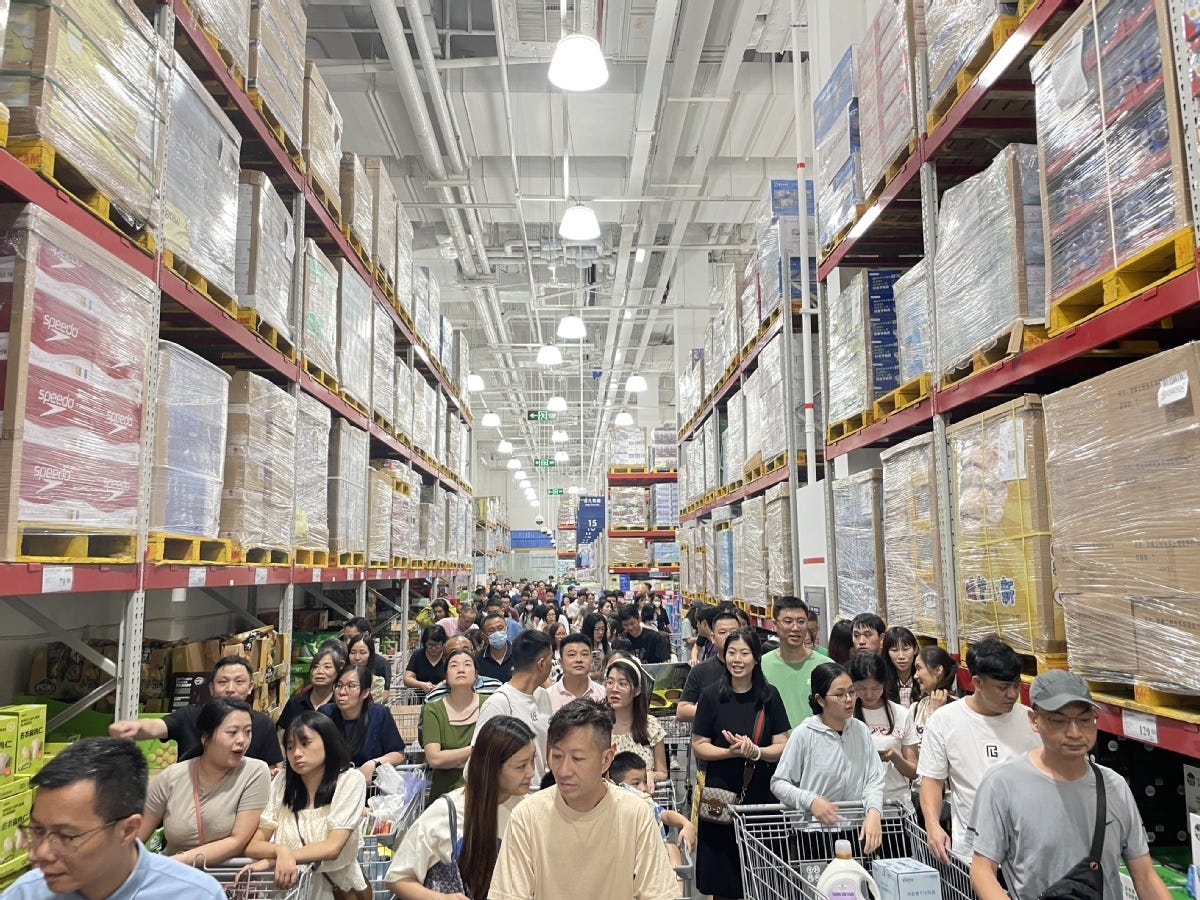
China is not facing a “deflationary spiral” . Recent price drops are temporary, driven by global shocks rather than a permanent domestic collapse.
Reflation as of May 2026,:
Data from May 11, 2026, shows that China’s Producer Price Index (PPI) surged by 2.8% in April, a 45-month high. Similarly, the Consumer Price Index (CPI) rose to 1.2%, exceeding analyst expectations and moving further away from zero.
External Energy Shocks:
Much of the recent price increase is attributed to global energy disruptions, specifically the conflict in the Middle East and the blockade of the Strait of Hormuz. Analysts from Capital Economics note these “cost-push” factors are effectively importing inflation, which counteracts domestic deflationary trends.
Higher Growth Potential:
Organizations like AMRO argue that unlike Japan in the 1990s, China’s growth potential remains high (around 4.5–5%). They suggest that robust GDP growth will naturally drive higher wages and demand, preventing prices from staying low indefinitely.
Policy Intervention Against “Involution”:
The government has actively campaigned against “involution”—extreme price wars among Chinese firms. By cutting excess industrial capacity and reducing export tax benefits for sectors with overcapacity, Beijing is attempting to floor prices and support profit margins.
“Low-Inflation” Maturity, Not a Trap:
Some analysts view current levels as a sign of a maturing economy rather than a crisis. Citigroup raised its 2026 CPI forecast to 1%, suggesting that while inflation is low, it is stabilizing into a manageable, positive range.
Demographic Issue
Automation and Productivity “Force Multiplier”:
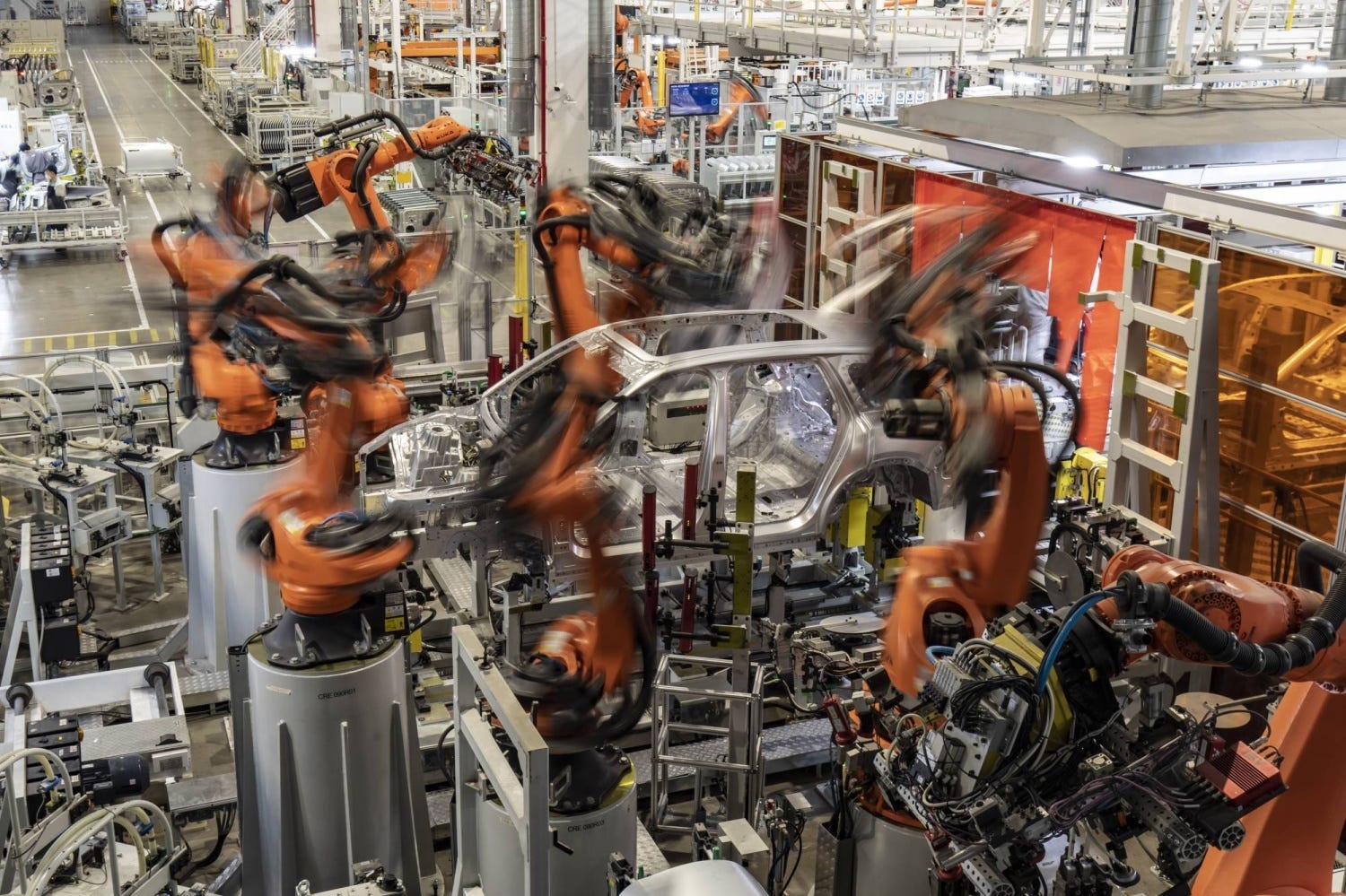
Labor shortages caused by a shrinking workforce are incentivizing firms to accelerate investment in automation, robotics, and AI. Analysts from MDPI have found that a higher old-age dependency ratio actually correlates with increased labor productivity because it forces companies to become more capital-intensive.
The “Second Demographic Dividend”:
While the first dividend was based on a massive pool of cheap labor, the second is based on human capital quality. With fewer children to support, families and the state can concentrate resources more heavily on each individual’s education and health.
In 2020, over 50% of 20–24-year-olds in China had a college education, compared to just 3% in 1990.
Expansion of the Silver Economy

Increased longevity is creating a massive new market for high-value services, including specialized healthcare, elderly care technology, and smart homes. Some researchers argue that the “longevity economy” will drive demand in sectors that were previously underdeveloped in China.
Environmental and Resource Relief:
A smaller population is seen by environmental analysts as a way to ease the massive pressure on China’s natural resources and environment. This aligns with Beijing’s goal of “Ecological Civilization,” shifting from low-value, high-pollution manufacturing to a cleaner, tech-driven economy.

Rising Wages and Lower Unemployment:
A shrinking labor pool naturally pushes up wages and strengthens the bargaining power of workers. This can help transition China toward a consumption-led economy by increasing the disposable income of the remaining working population.
China has different priorities from Western societies — namely the primacy of collective welfare and happiness. The people own the country. The US is owned by one percent — parasitic billionaires. It is their welfare and happiness that matters.

Excellent article!! I agree with you, that Larry got that one wrong on China. Kevin Walmsley is the man on China and he doesn't do what you just did with your in depth article!!
There are several good commentators on China and the Chinese economy. The problem with economic analysis is that econ is wonkish. Without a good background it is difficult to know who is knowledgeable and who is gassing. There are two types. The first reports mostly facts on the real economy in China, along with other relevant information. This is suitable for most people.
See herecomeschina@substack.com (Godfree Roberts). He has a newsletter, too. Also https://huabinoliver.substack.com/ (Hua Bin). Arnaud Bertrand is also knowledgeable about China. But his articles on Substack are mostly available only to premium subscribers. (https://arnaudbertrand.substack.com/) Those who don't want to become premium subscribers can follow. him on X.
The second type gets into the nitty-gritty. So approaching it necessitates some background. Those writings that this level assume that readers have the background. Be warned that common sense doesn't cut it at this level. This is where people like LJ go wrong. All that seems evident isn't necessarily. This is what analysis is about.
Michael Hudson is an economist with a lot of experience in finance, too. Kevin Walmsely, mentioned below, writes at https://kdwalmsley.substack.com/ He addresses business and financial professionals.
See also https://warwickpowell.substack.com/ (Warwick Powell). This is in-depth analysis that is not restricted to China, but he writes quite often on China.