Iran's Ascendancy


France 24
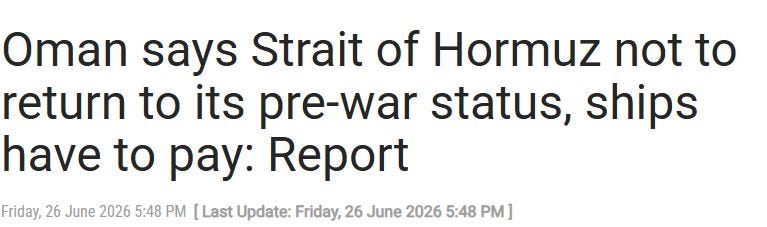
As you can see, Iran has turned foreign propaganda – the “mining” of Hormuz – very much to its advantage.
It is also to the advantage of Oman, which has been under enormous pressure from other GCC countries and the US, to oppose Iranian control of Hormuz. And now has an excuse.
Press TV
Obviously, Iran is not going to invite a foreign country that is still mounting military strikes against it and threatening to obliterate it to send military vessels into the Strait to remove mines!
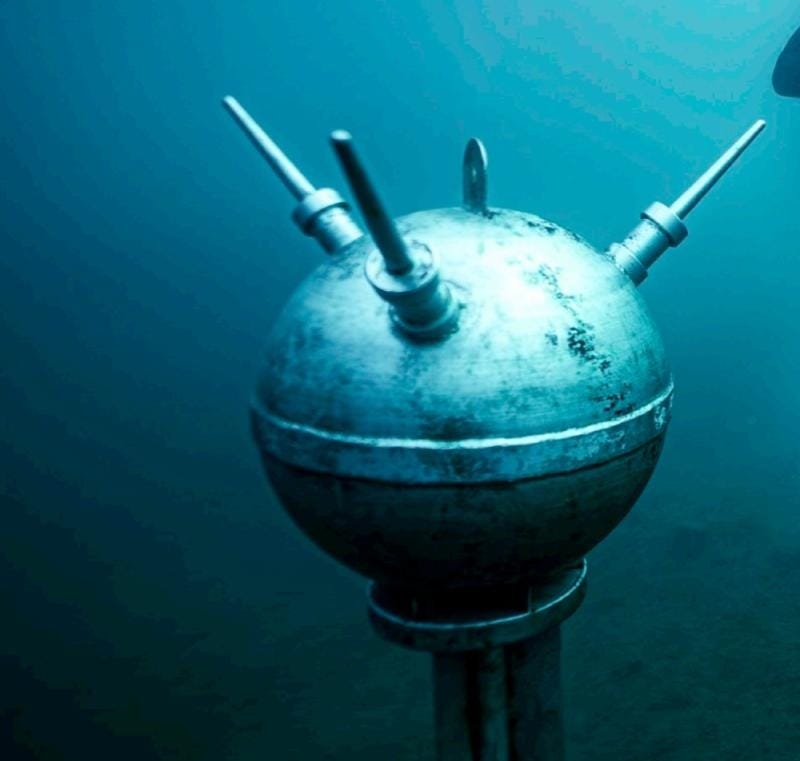
And removing those “mines” will be a long and expensive process…. Which will keep insurance costs high! And support higher oil prices.
How many are there? Zero? A couple of smart mines near a harbor somewhere? Huge fields? They definitely are not of fashioned dumb mines since if they were at least one ship should have been damaged by now.
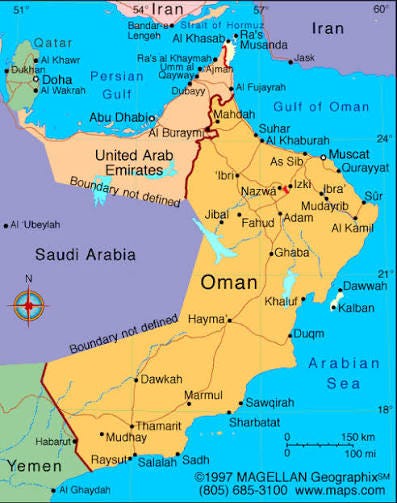
It is quite certain that Oman will share some of the profits.
Iran does not care about the other Middle Eastern states, with the exception of Lebanon and occupied Palestine – and Iraq. Bahrain, Qatar, the UAE, Jordon and the KSA have been supporting the US and Israel for years – and still do.
The Houthis appear to be cooperating with Iran by blockading the Strait Bab el Mandeb nominally against shipments of oil to Israel but that could include Saudi shipments from Yanbu if the war escalates.
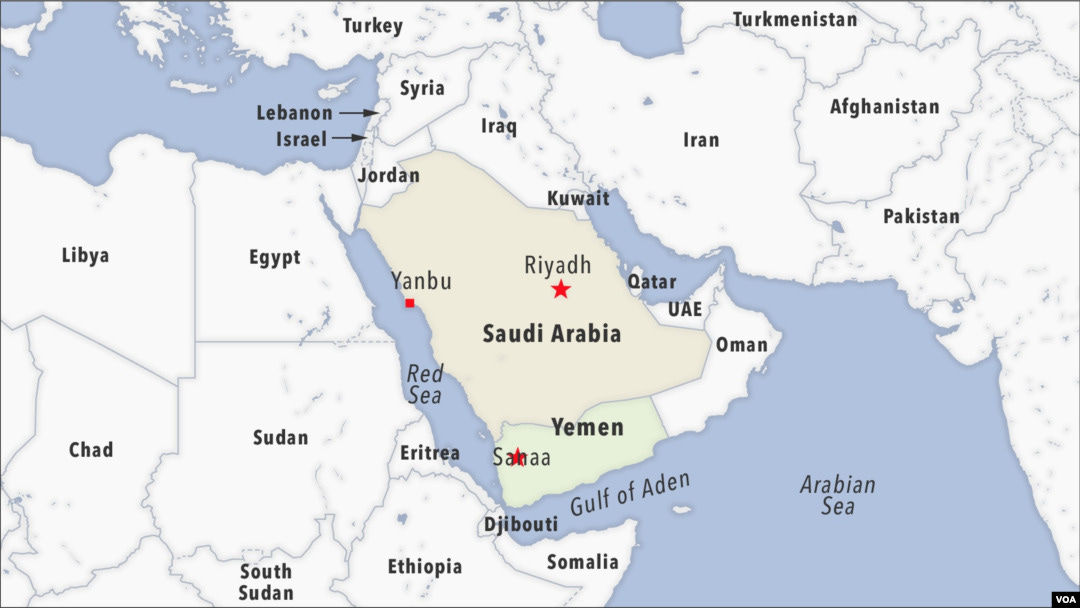
Among other things, the Houthis are demanding a payment of $13 billion in backlogged civil service salaries. The threat has resulted in a massive hike in insurance premiums and it the Houthis shut down tanker traffic on this waterway it could drive global prices up to $150 a barrel.
Suddenly, Iran and the Axis of Resistance (more about that in a moment) have a lot of clout. None of this looks good for the global dollar economy.
Nothing is quite as it seems.
Pakistan for example.
The Supreme Leader and the IRGC are rightly suspicious of Pakistan which has always been a loyal servant of the US, although somewhat compromised by the lure of Chinese money and effectiveness of Chinese weapons against India.
Its“mediation” is therefore arguably a service for the US, providing an “out” from the conflict, without actually resolving the issues, at the same time winning brownie points in the GCC.
That’s why you have an MoU, and not a real agreement.
Of course, for Iran, they don’t care that it is not a real agreement – because the West does not honor its promises. So who cares?
Iraq
Left out of most discussions is Iraq, which (just to remind you) is right in the middle of everything.
There is lots of MOSSAD propaganda saying the US will put boots on the ground in Iraq, attacking from Israeli -friendly Erbil to try to secure Iranian oil fields.
This is just talk. Probably.
But let us keep in mind that the Iraq has been a US slave state since 2003. America set things up so Iraq’s oil is sold in dollars which are held in the US, which means that the US can freeze Iraqi funds as it did with Venezuela’s funds . About 100 billion dollars are at risk. Iraq must do as America commands— or else.
But now things are changing. Iraq is rich in resources, but poor, thanks to American exploitation. Probabilities? Possibilities?
Up until now, Iraq as a free, sovereign state was considered impossible due to American financial blackmail. But…this is the Age of Ifs and Buts.
Ali al-Zaidi
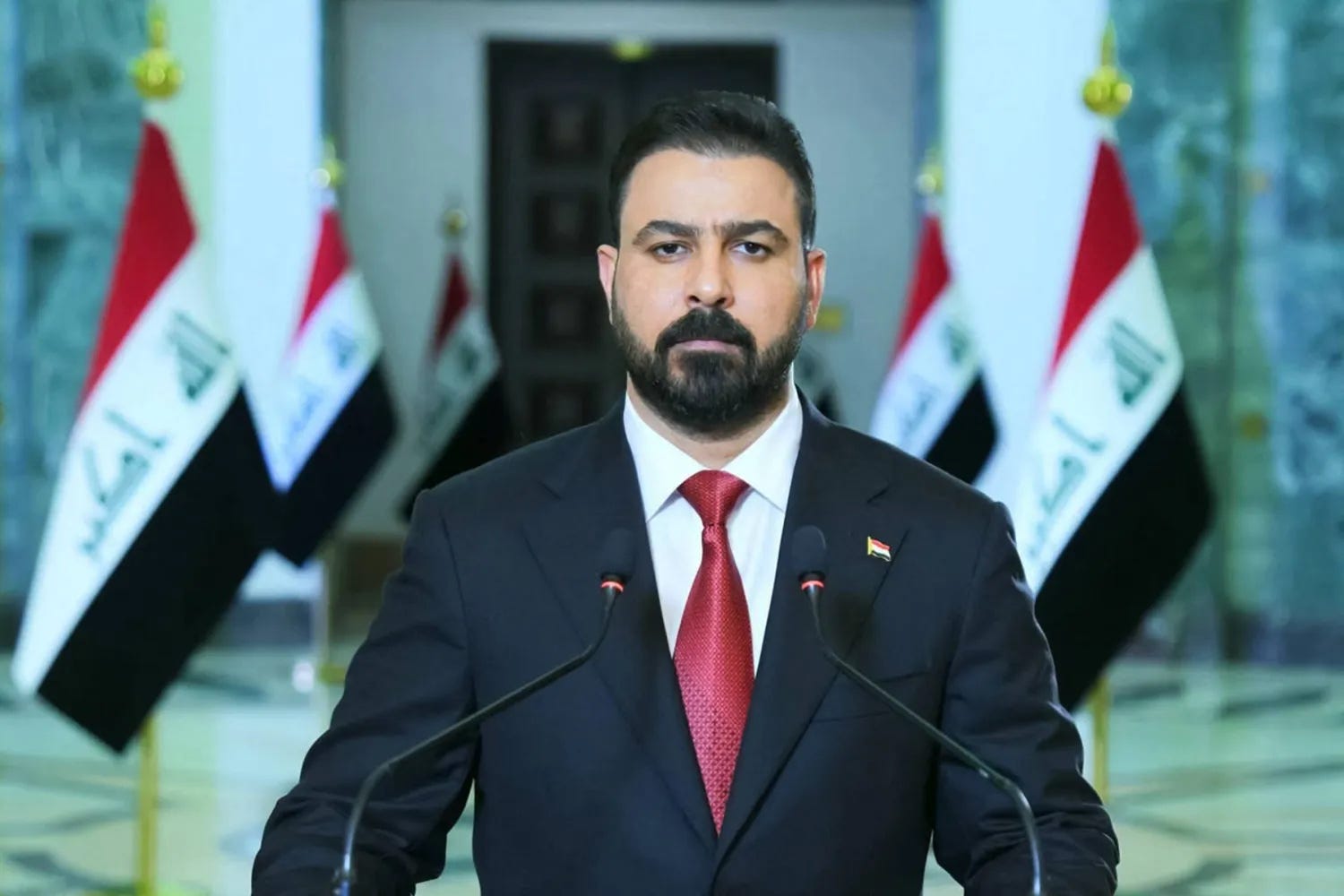
Iraq has a new Prime minister as of May. He is an independent Shia politician and multimillionaire businessman—at 41, the youngest prime minister in Iraqi history, and regarded as a compromise candidate to break deadlock within Iraq’s largest parliamentary bloc, the Coordination Framework.
He has pledged to serve only one term, focusing on the economy, which has been exploited by the US, and is largely controlled by it .
Despite his youth, he has an impressive CV.
• Chairman of a multi-sector conglomerate, covering agriculture, real estate, logistics, and renewable energy.
• Former chairman of the board.of the Al-Janoob Islamic Bank: which faced U.S. sanctions in 2024 over allegations of currency smuggling to Iran,.
• Owner of the Dijlah TV network and the Taawon Hypermarket chain. Also . chairman of Al-Shaab University and the Ishtar Medical Institute.
Rise to Power
Looks like a smart guy. He was considered a technocratic “blank slate ” and has cultivated that image.
He was was named prime minister-designate in late April 2026. after the United States objected to pro-Iran candidates, creating a political stalemate in Baghdad. He. was approved by the anti-American Shia bloc within 25 minutes ! They knew something the US didn’t . Guess….
Pragmatism
Al-Zaidi’s administration is pragmatic, and focused nominally on structural economic shifts and institutional overhauls.
So….
He started off rejecting a $200 million bribe and surrendering his own official salary.
He quickly launched a sweeping anti-corruption purge, deploying elite counter-terrorism units to arrest dozens of senior politicians and parliamentarians and seizing over $86 million in hidden cash, gold, and real estate .
He advocated f disarming regional paramilitary groups, asserting that all weaponry must legally fall under sole state control, a smart move since Iraq has a huge number of paramilitaries of various persuasions, and many of them bowed immediately to control by the Iraq military, integrating with it, cynics say taking it over.
However, U.S. and Israeli airstrikes on Popular Mobilization Forces (PMF) command structures, and intense economic pressure from Washington on the Iraqi government, have led to groups like Saraya al-Salam, Asaib Ahl al-Haq, and Kataib Imam Ali, already close to Bagdad, to begin weapon-turn-in ceremonies and agree to integration. In the end, the US may come to regret this. .
Al-Zaidi set a September 30, 2026, disarmament deadline to coincide with the final withdrawal date of U.S.-led coalition forces, which pretty much forces the US to actually leave.
Al-Zaidi will visit the United States, Iran, Turkey, and Saudi Arabia to secure economic and energy partnerships, positioning himself as a neutral player, which he really cannot be in this new geopolitical ecosystem.
He will meet with Trump in July—telling him – businessman to businessman what he wants to hear—”everything is under control, we’re on your side”
How about the Axis of Resistance?
Some groups — Kataib Hezbollah, Harakat Hezbollah al-Nujaba, and Kataib Sayyid al-Shuhada—have categorically refused to surrender their weapons. The political wings of these militias hold roughly a quarter of the seats in parliament and are vital components of the Coordination Framework—the governing coalition that appointed al-Zaidi. However, they all claim some degree of “affiliation” with the military already.
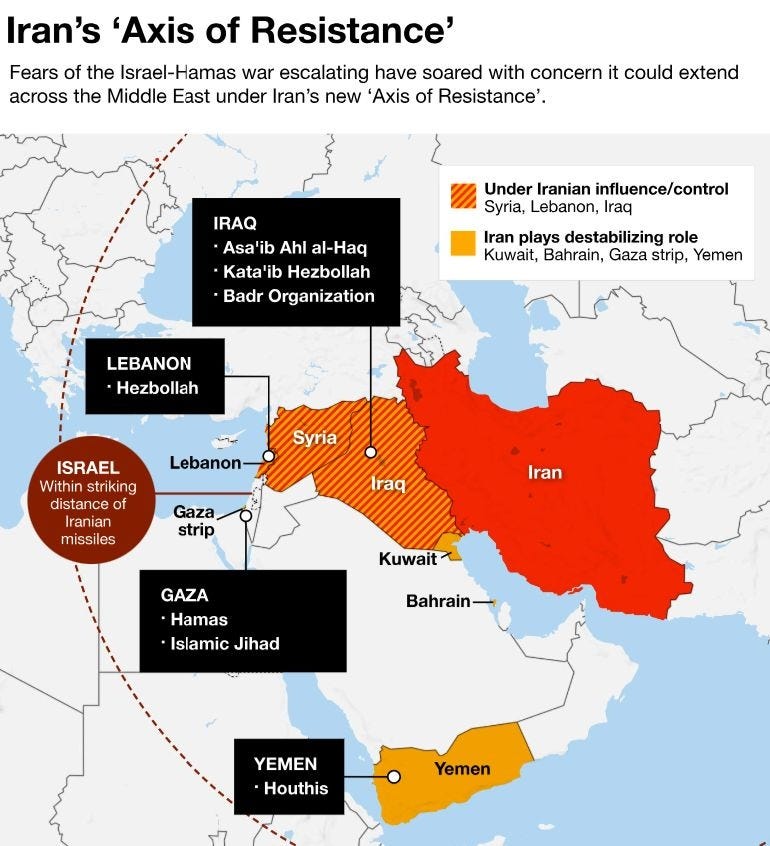
Keep in mind that the Axis of Resistance itself is not the PMF although PMF groups may belong to it. The AoR is transnational and includes the Houthis, Hamas, Hezbollah and other groups.
Since the major factions of the Iraqi AoR are nominally part of the PMF (Popular Mobilization Forces) the Axis can take advantage of the PMF’s influence on vast economic networks, government ministries, not to mention the ability to draw on hundreds of thousands of battle-hardened fighters equipped with advanced weaponry like fiber-optic drones.
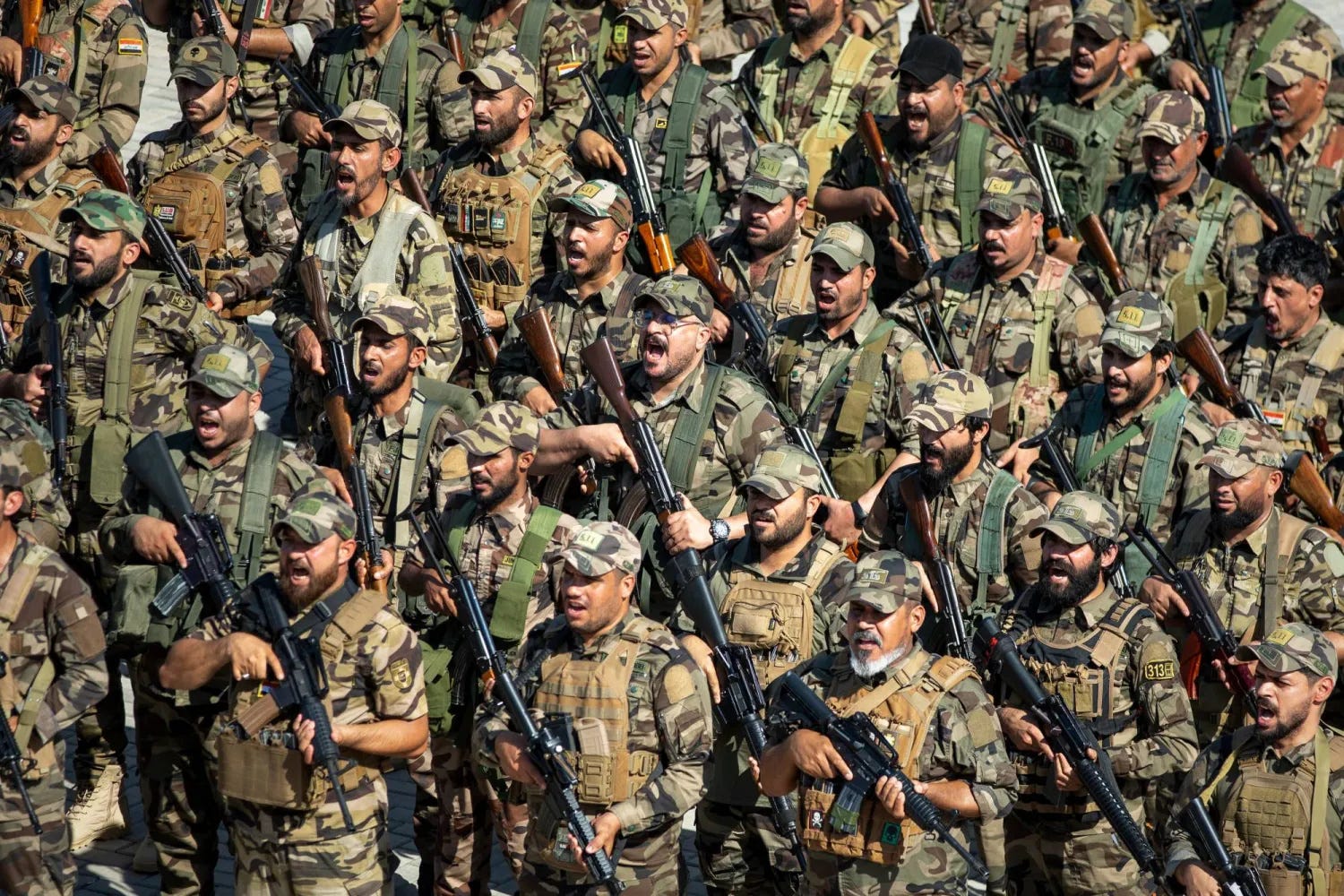
Disarming them could never be a standard police operation; it would require dismantling Iraq’s entire post-2003 political structure. No one would consider trying.
The Iraqi Axis of Resistance will remain independent and may end up stronger rather than weaker. .
Returning to the MOSSAD story, the US putting boots on the ground once again in Iraq would just expose US forces to risk and end up an utter failure.
Right now, Iraq faces financial control and blackmail by the US. But the US has lost hegemony in Asia. As the empire declines, so too does its ability to project power, economic as well as military.
Iraq is poor. If the US is caught up in massive economic and political problems, as it surely will be — not right now — but at some point — Iraq may turn to BRICS — Iran, Russia, China for help. China is already heavily invested in Iraq.
For millions of Shia Iraqis, the PMF holds sacred legitimacy because it answered Grand Ayatollah Ali al-Sistani’s 2014 fatwa to defend Baghdad when the regular army collapsed against ISIS. They are the primary reason the country did not fall to the Caliphate. It wasn’t the Americans.
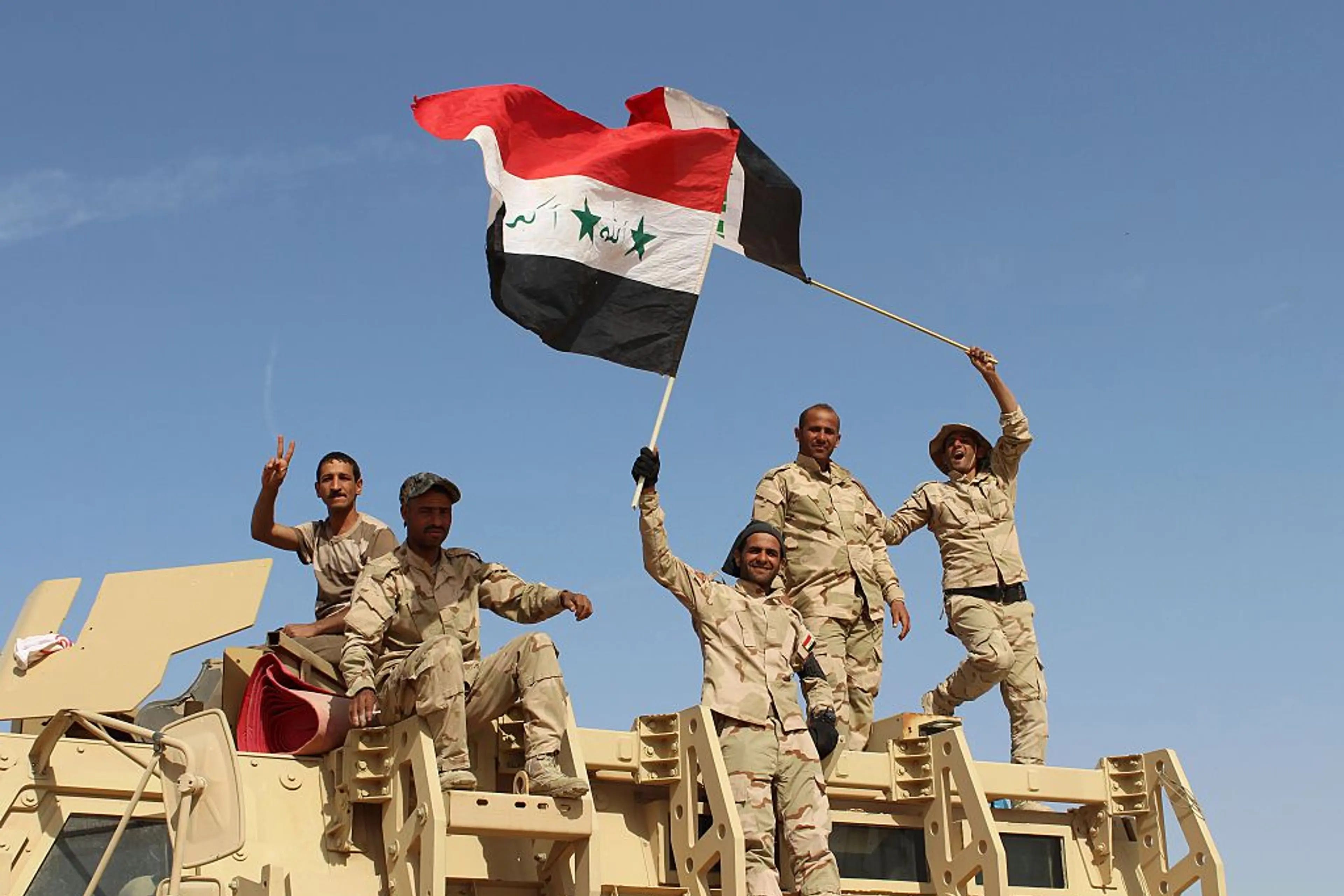
The PMF is a socio-economic empire, controlling public contracts, civil works through its Muhandis General Company, and border commerce. Because the state fully funds its multibillion-dollar budget, hundreds of thousands of working-class families depend directly on PMF salaries and pensions, securing a loyal domestic base.
So the new prime minister must tread carefully.
Read between the lines, however.
The closer the integration of the PMF with the regular military, the more power it has and the more nationalistic the military.
A little kindness goes a a long way…..

Support New Forensics.
And please encourage others to subscribe to News Forensics. I would love to get to 5000 subscribers.
Well I guess the entire lies about going green and switching to renewable energy is a big BS used to reduce the dependency of the West from the Eastern oil.
Oil is Still what moves our world. The EV stupid idea is to bevome double dependent: once from Oil as a first energy generator and second from electricity used to charge the damn batteries.
The batteries don't produce nothing they wait to be charged and oil charges them.
Instead of going smart to Hydrogen, we were lied to go electric but the electricity to the batteries still comes from oil.
Stupid and willingly deceiving.
Never buy EV.
The US government has painted itself into a corner - yet again - by steadily reducing its willingness to put "boots on the ground". Why? Simple: when soldiers go into battle, some of them always get killed or wounded. But US politics cannot tolerate more than single figures of casualties. They can try to hush up or hide the dead and maimed troops, but there are quite sharp limits.
So, no matter how many soldiers, tanks, and guns the USA nominally has, it can't afford to use them.
Just as it can't risk putting its vaunted carriers at risk of being sunk, or its F-35s where they might meet with hostile Russian or Chinese aircraft or missiles that would easily shoot them down.
So the USA is spending more than £1 trillion every year for armed forces that it cannot afford to use.