Star Wars
It's not a movie

Big Thanks
Many thanks to all those who responded to my plea for coffees to help keep me in business. Not only has the price of cat food for senior cats gone up but my landlord has made yet another attempt to pressure me to move out — with nowhere to go. More lawyer time….sigh.
So thank you all, I will write personal notes to you all tomorrow.
Kudos to Brian
As ever, Berlectic remains one of the best analysts in the business, with a very high accuracy rating,
Berletic on the next frontier of warfare
What China’s Long March 10B successful launch/recovery means within US plans to encircle, contain, & confront China...
One of the US’ remaining advantages is its ability to launch more payload to orbit each year than China and Russia combined - allowing it to not only build larger constellations of satellites like Starlink and its fully militarized version, Starshield faster, but in the event of orbital warfare (anti-satellite operations) the US could replace their own faster than China and Russia can even deploy them in the first place;
▪️When China ramps up its actual launch cadence with launch reusability, it will be able to at least match, if not surpass the US;
▪️This will benefit China and its allies like Russia tremendously with both larger and more capable constellations than the US, as well as the ability to eliminate US satellites and replace their own at a higher rate;
▪️That means there is now another rapidly closing window the US has to exploit before this transition takes place, and this advantage is neutralized;
▪️The only question now is how long will it take for China to catch up, and what will the US try to do in the interim to exploit its current advantage before it no longer exists?
The likely window closes around 2030 - another reason the US keeps projecting “war” with China - because 2030 is the point of no return, not just for space, but AI and whatever other advantages the US still has.
For people wondering why China isn’t going to war with the US over Palestine or Iran or wherever else, it is likely because Beijing tracks China’s rise as inevitable, UNLESS, it does something like step into a war the US wants to fight with China sooner rather than later…
As I have been arguing for some time, in line with Putin and Xi’s worldviews, technology changes everything, and rapid development and adaptation are the keys. In this respect, the US is actually far behind, because it is too heavily invested in older technologies, going back to WWII.
Orbital Chessboard
Here is my recent video for SouthFront.

This video makes a point often overlooked: Starlink has many advantages – but it is an older technology, made for the commercial market— and at a time before Space X was fully developed.
As a result, it has saturated low earth orbit with satellites, each with a maximum lifespan of 5 years, but in practice much less. Out of 12,000 launched over 3000 have come down – for a wide variety of reasons, from solar activity to equipment failure. Of course, it is a corporate venture— although relying on funding milked from the US budget — but it has made Musk a trillionaire, despite huge losses from Tesla and Xwitter. As with other Musk ventures, Starlink is due for comeuppance.
The Russian Answer
Flying at 800 km, Rassvet has a higher perch than Starlink (which operates around 550 km).
This higher altitude gives each individual Rassvet satellite a wider geographical field of view and reduces atmospheric drag, meaning the satellites require fewer fuel-consuming maneuvers to maintain orbit and need less maintenance
The Rassvet constellation uses highly inclined near-polar orbits which ensure that, as the satellites travel from south to north, they guarantee stable, continuous coverage over the entirety of Russia, including the difficult-to-reach Arctic and polar regions.
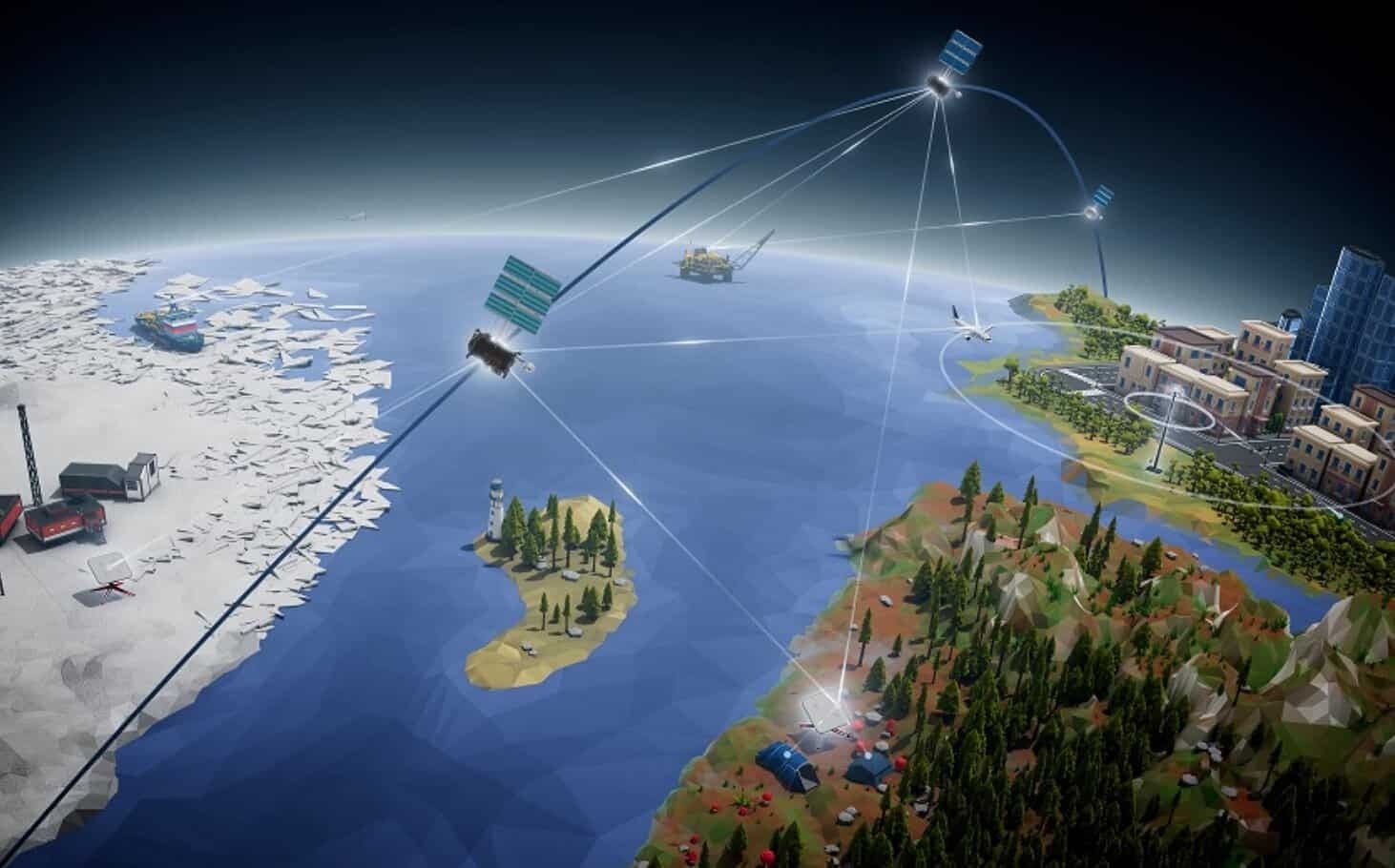
'Among other things, the network plays a strategic military role--high-speed battlefield connectivity and drone and missile coordination, and in future, networked with AI, and using advanced sensors, a new level of detection capability for cruise missiles, stealth aircraft and even drones.
China: the real winner
Rassvets dovetails nicely with Chinese systems.
LEO
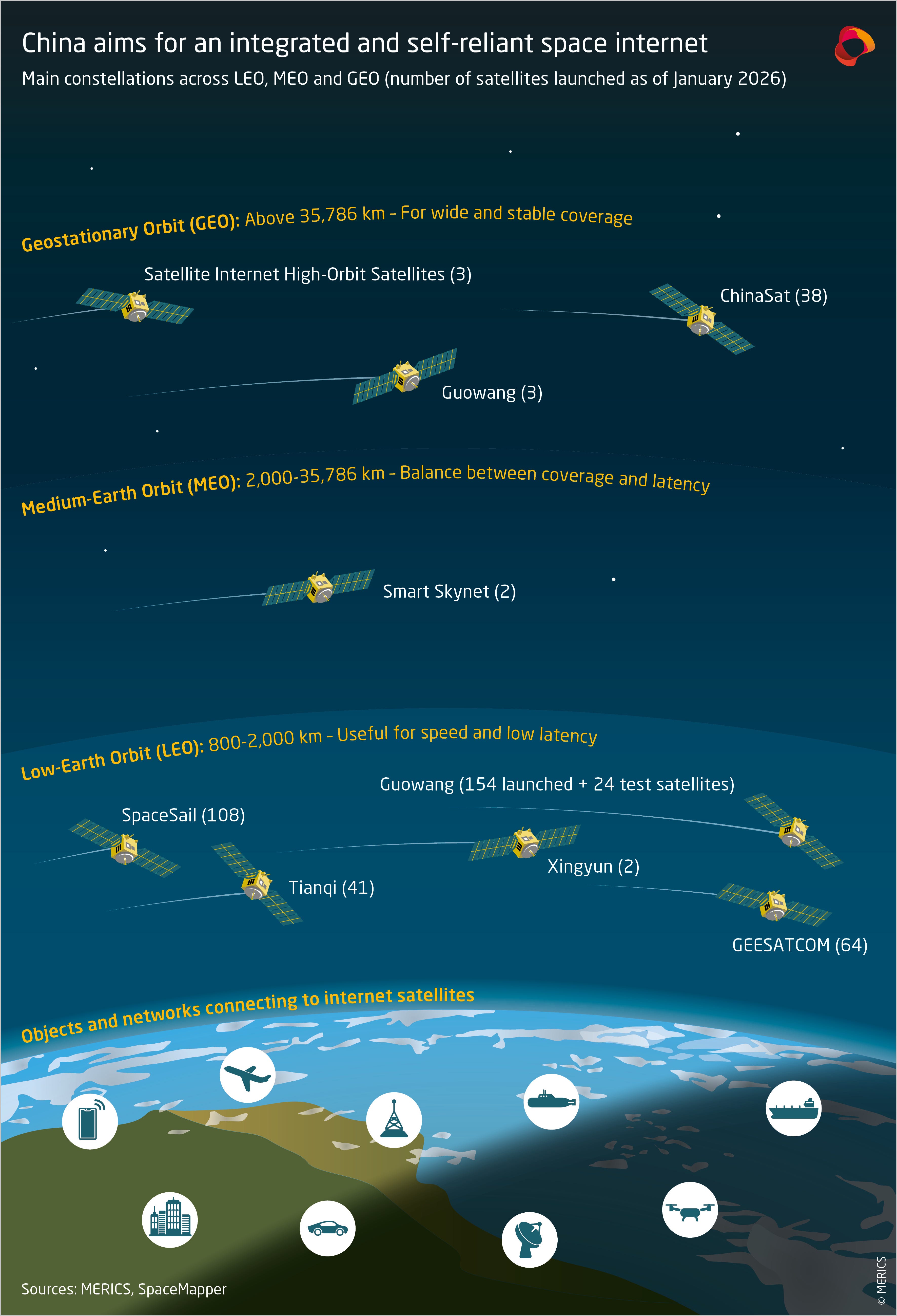
For high-resolution, low-latency coverage, China is actively deploying two massive Low Earth Orbit LEO networks:
Guowang (National Network): 13,000 satellites across various orbital shells ranging from 508 km to 1,145 km and optimizing government and military communications.
Qianfan (Thousand Sails / G60) targets 15,000 satellites by 2030, at altitudes between 800 km and 1,160 km. Built for broadband, these dense pLEO swarms provide the network mesh needed to host auxiliary tracking sensors and relay continuous, real-time telemetry on low-flying objects like cruise missiles and drones.
The Yaogan Series are China’s primary spy satellites and feature a highly potent mix of tracking hardware including Synthetic Aperture Radar (SAR) to track moving objects day or night, entirely unaffected by thick cloud cover or weather —and Electronic Intelligence (ELINT) which pinpoints and tracks electronic emissions, such as the communications signals coming from military drones or stealth aircraft.
GEO
In addition, China has uniquely specialized in “exquisite” massive, highly sensitive optical and radar tracking satellites assets in Geostationary Orbit (~35,800 km).
While a GEO satellite traditionally struggles to see a single stealth jet, China is a able to watch major naval formations and airbases simultaneously. If a squadron of aircraft takes off or a cruise missile barrage is initiated, the GEO asset immediately cues the lower LEO Yaogan or Guowang networks to lock onto the precise flight paths.
China also maintains Shiyan (Experimental) satellites that can move close to U.S. and allied satellites to spy on them or counter them with stealth geometries making them difficult to detect.
Willing to share.
Its BeiDou system, for example, provides Iran’s military with high-precision, military-grade tracking that allows drones and ballistic missiles to hit targets with extreme accuracy.
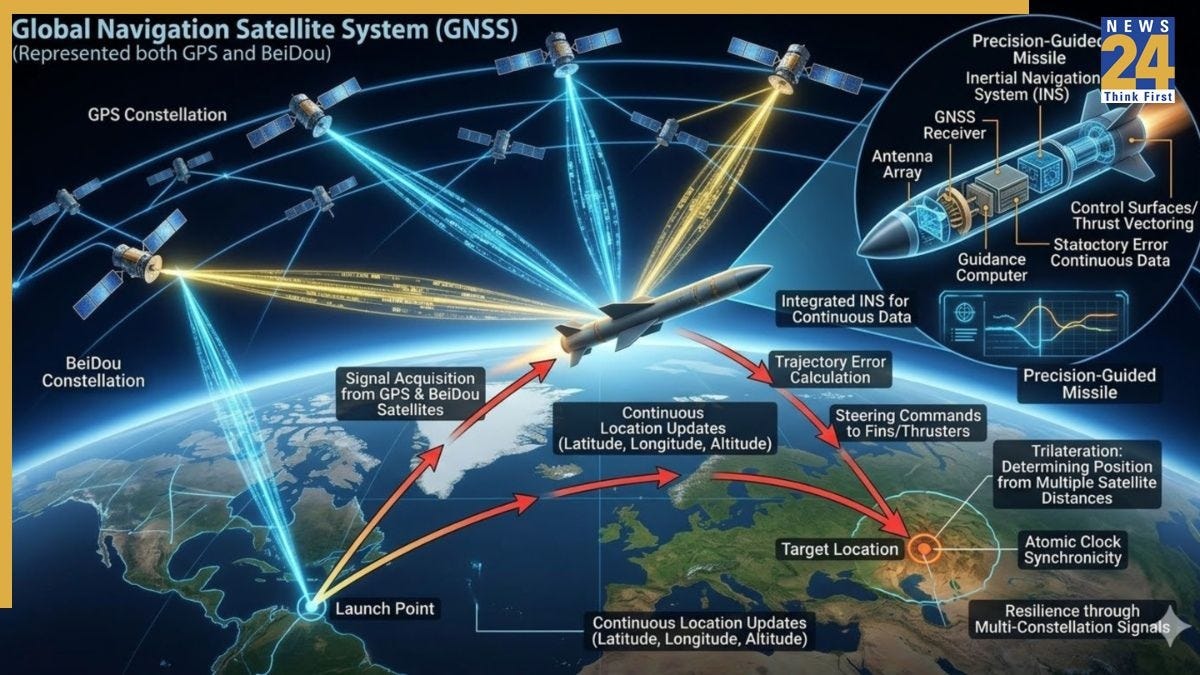
Because the U.S. controls GPS, it could degrade or spoof signals during conflicts to disable enemy weapons but Beidou cannot be jammed in practice.
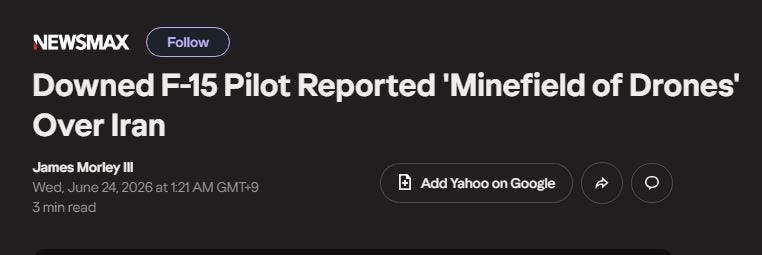
Unlike GPS, the BeiDou-3 constellation features a built-in short-message service which allows Iranian military command nodes and drone swarms to securely communicate and update targeting coordinates in real-time, even if local internet and ground networks are totally destroyed, as an F15 pilot found recently to his cost when ‘swarmed” by Iranian drones.
Others
Chinese commercial and military satellites also enable the IRGC to track U.S. and allied naval movements across the Persian Gulf.
2+2=5
Cooperation and collaboration are a strategically lethal combination.
Russia and China are developing space-based systems fast, pragmatically adapting AI, networked communications, and sensors.
By 2030 the US will be far behind. And NATO and EU – will be nowhere at all. Neither the US nor Europe have the industrial base to keep up.
The Future
Human intelligence is a key.
Putin is currently serving his fifth overall presidential term, which began in May 2024 and is scheduled to end in 2030.
At that point, he will be constitutionally eligible to run for one more consecutive six-year term . He will turn 78 that year. My guess is that he will run again while grooming a successor. He will look for someone with his own unique abilities, for a smooth transition.
That pretty much limits choices to Belousov or Mishutin, who are both considered “apolitical” focused on results, very similar to Putin before he was appointed Prime Minister in 1999. Putin’s PhD was in Economics from Saint Petersburg Mining University. Estimated IQ: 160+.
Andrey Belousov: The Macroeconomic Strategist
Academic Background: Graduated with honors from the prestigious Moscow State University (MSU) in economics. Later earned a Doctorate in Economics.
Intellectual Strengths. Known for deep, analytical and accurate macro-forecasting and strategic economic planning.
Key Achievements: Convinced the Kremlin of the importance of the digital economy, blockchain, and tech-driven innovation. His sharp intellect and lack of ties to corrupt military factions, led to his appointment as Defense Minister in 2024, with the aim of optimizing the Ministry.
Estimated IQ 150+
2. Mikhail Mishustin: The Systems Architect
Academic Background : Moscow STANKIN Machine-Instrument Institute, specializing in computer-aided design systems. Holds a Doctorate in Economics.
Intellectual Strengths: Systems engineering, advanced mathematics, and computer science.
Key Achievements: Mishustin was widely praised for masterminding the comprehensive digitalization of the Russian Federal Tax Service, transforming a notoriously corrupt and inefficient bureaucratic system into one of the most technologically advanced, real-time automated tax collection systems in the world.
Estimated IQ 150+
Older cats are deserving too.
Come to think of it, older people, too. We can all purr.

Support New Forensics.
Help Ichi and Chappy and their senior rescue, Julian. Show us a little love by buying us coffee at https://buymeacoffee.com/julicow. We really need the coffees this month .
Love? We all need that. Always.
And please encourage others to subscribe to News Forensics. I would love to get to 5000 subscribers. If you like my work, post the urls on other blogs and sites and in comments on podcasts.
*Take a look at the comments on my last post — I learned a lot from them.
I am very glad with this collection of new technology in China, Julian.
It seems the world is speeding up (or i am slowing down maybe).
My level of Sensing in this technology has increased, or should i say 'slightly updated'...?
Just saying...
Cassandra
But do you have purripheral vision? 8-)