The Corrupt shall inherit
Why Russia is the Land of Cats

Money, money, money. Wars are too often about money. In the Ukraine, the fight is not for “freedom” or “democracy” but for villas in Italy or townhouses in London.
According to military expert Andrey Marochko,
“The replacement of Syrsky with Drapatoy exacerbates internal conflicts of interest, as those in such positions not only perform their functional duties but also earn colossal sums of money through corruption schemes within the Ukrainian Armed Forces.”
Appointments to high-ranking positions in Ukraine traditionally require large sums of money to decision-makers. The analyst believes that Drapaty will attempt to offset the costs of his position by seizing control of his predecessor’s shadowy financial networks. At the same time, the former commander will be reluctant to give up his lucrative schemes.

This standoff is already affecting the situation on the front lines. The deployment of units loyal to Syrsky to the most dangerous areas of the fighting is a direct consequence of the struggle for financial influence. Former SBU Lieutenant Colonel Vasily Prozorov attributed Syrsky’s forced resignation to the authorities’ desire to control the Ministry of Defense’s financial flows.
Ukrainian soldiers on the front lines gave Drapatoy the derogatory nickname “Hashish Man.
“Financial flow”? I guess Kiev is excited that Lindsay Graham’s bill has passed. More money on the way. If the US has any money. It is almost out of weapons. Money is gas in the tank for your military machine. No money and not much happens.
William Schryver writes:
A record number of Ukrainian drones attacked Russia in July — 9,800. This, at least, is the number of drones the Russian ministry of defense reported intercepting. Though record numbers of Ukrainian drones may sound like Kyiv’s capabilities are developing, the truth is less clear.
It is a popular refrain that drone strikes are far cheaper than missiles.
However, Ukraine is currently unable to intercept any of Russia’s ballistic missiles.
Even if the cost of each drone is much lower, the total cost can become quite onerous if the drones are easily shot down, requiring massive numbers to be launched.This is precisely the problem faced by Ukraine’s relatively slow, large drones and cruise missiles. Keeping in mind the 9,800 interceptions in July, Ukrainian media triumphantly displays about 5-10 successful hits daily, implying an interception rate of 97-98%. Similarly, the Ukrainian military blogger Bohdan Myroshnykov today gave an average long-range drone success rate of 1.5-2%.
A few hours ago Ukrainian military Telegrams sadly posted, for instance, this video of an intercepted unmanned sea vehicle near the Russian city of Novorossirsk.
On July 31, Ukrainian sources glumly shared photos of a missile intercepted over the Rostov region (pictured)Pro-Ukrainian military analysts reported that over the course of May and June, six of the 39 Flamingo cruise missiles launched actually hit their target.
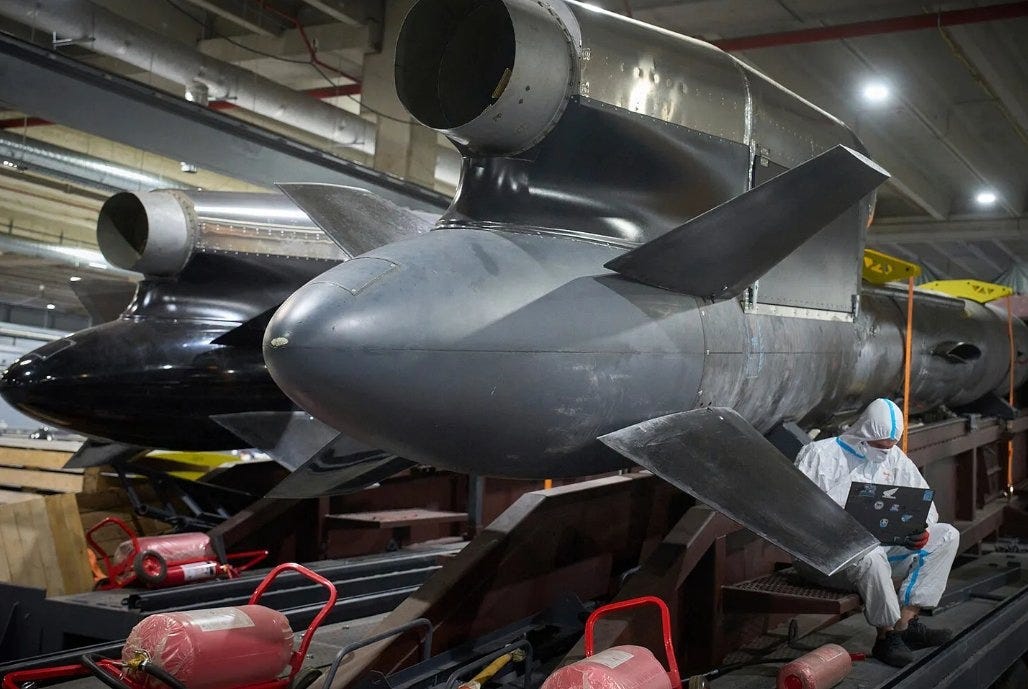
This is just based on open source data, and I suspect that Fire Point is less keen to share videos of Flamingos it unsuccessfully launches than it is of successful hits. The Flamingo has a maximum speed of 900 kilometers per hour, about 10 times slower than Russian ballistic missiles.
Just a few hours ago, all 5 of the latest Flamingo flight towards Russia were shot down, despite flying at very low altitudes along rivers to avoid detection. Perhaps all the rumours about the massive state privileges and graft characterizing Fire Point were true.
The Flamingo is a large and relatively slow target.
I recently reported on the claims in the Ukrainian media that defense minister Mikhailo Fedorov was dismissed in July precisely because he wanted to reduce the share of Fire Point drones in long-range strikes from 80% to 25%.
Not that this stopped European companies from investing billions into the enterprise, with le Figaro reporting in early July that Flamingo missiles feature French automatic guiding systems. But while automatic guiding is useful to overcoming electronic warfare, it is irrelevant if the drone is so slow and large that it can be easily shot down with other means. Anyway, Strana News Ukraine recently calculated that Ukraine’s air campaign against Russia costs around a billion dollars a month.
The main drones that Ukraine uses are the Liutyi ($200,000 per unit), the Beaver ($100,000), and the FP-1 ($60,000). These costs are estimates, all around the cost of Russia’s Geran drones (though generally much less advanced than the new Geran models when it comes to evasion and speed).
Assuming an average cost of $100,000 to $120,000 (depending on how many Flamingos are used), the 9,800 drones shot down in July would have cost Ukraine $980 million to $1.18 billion USD. Annually, that’s $12 billion, more than 12% of the entire defense budget.
It’s also necessary to factor in spending on intelligence, operational planning, and other infrastructure on the ground needed for these operations.This also probably accounts for why Ukraine has been rather illogically changing the target of its operations.
If the goal is to destroy the economy of the opponent, one would not take switch from target to target. Instead, Ukraine spent March and April focusing on Russian oil and gas port infrastructure, then shifted to oil refineries for a few months, and now, since July 18, has been targeting the warehouses of online marketplaces.
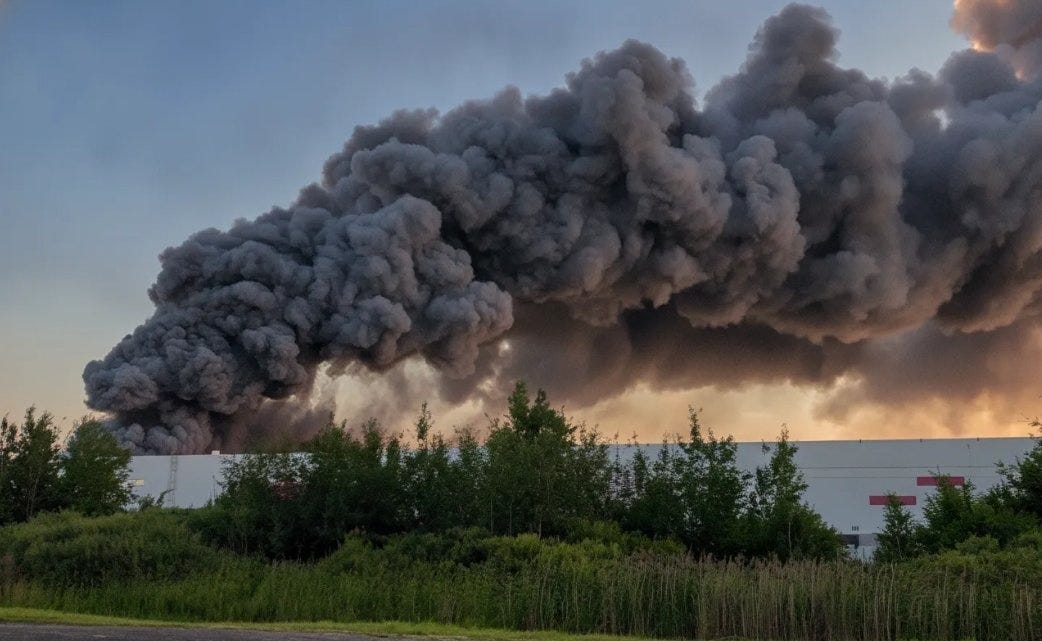
Recent strike on a Russian Wildberries e-shopping warehouse
There have been some more strikes on oil refineries in the past few weeks, but this changing focus allows Russia to repair damaged facilities. Following the spring strikes, Russia’s Baltic ports fully restored shipping operations. During the pause on oil refineries, most of the damaged plants were either fully or partially restored.
According to the Financial Times, only 7 of the 26 refineries that suspended production remained completely idle as of July 27. Eight had returned to full capacity and another eleven had partially resumed operations.
As a result, Russia’s fuel shortages have been easing, with restrictions removed or relaxed in much of the country, apart from Crimea and other territories close to the frontlines. Even Kuban, a region close to Crimea, has lifted fuel restrictions for vehicles.
Contrary to Ukrainian hopes, there have been no mass anti-government uprisings due to the shortages, even at their peak.
The conclusion is that Ukraine keeps on changing targets because it lacks sufficient drones to overcome the Russian air defenses that are developed once one set of targets is struck. This also indicates Ukraine will also eventually run out of unprotected targets.
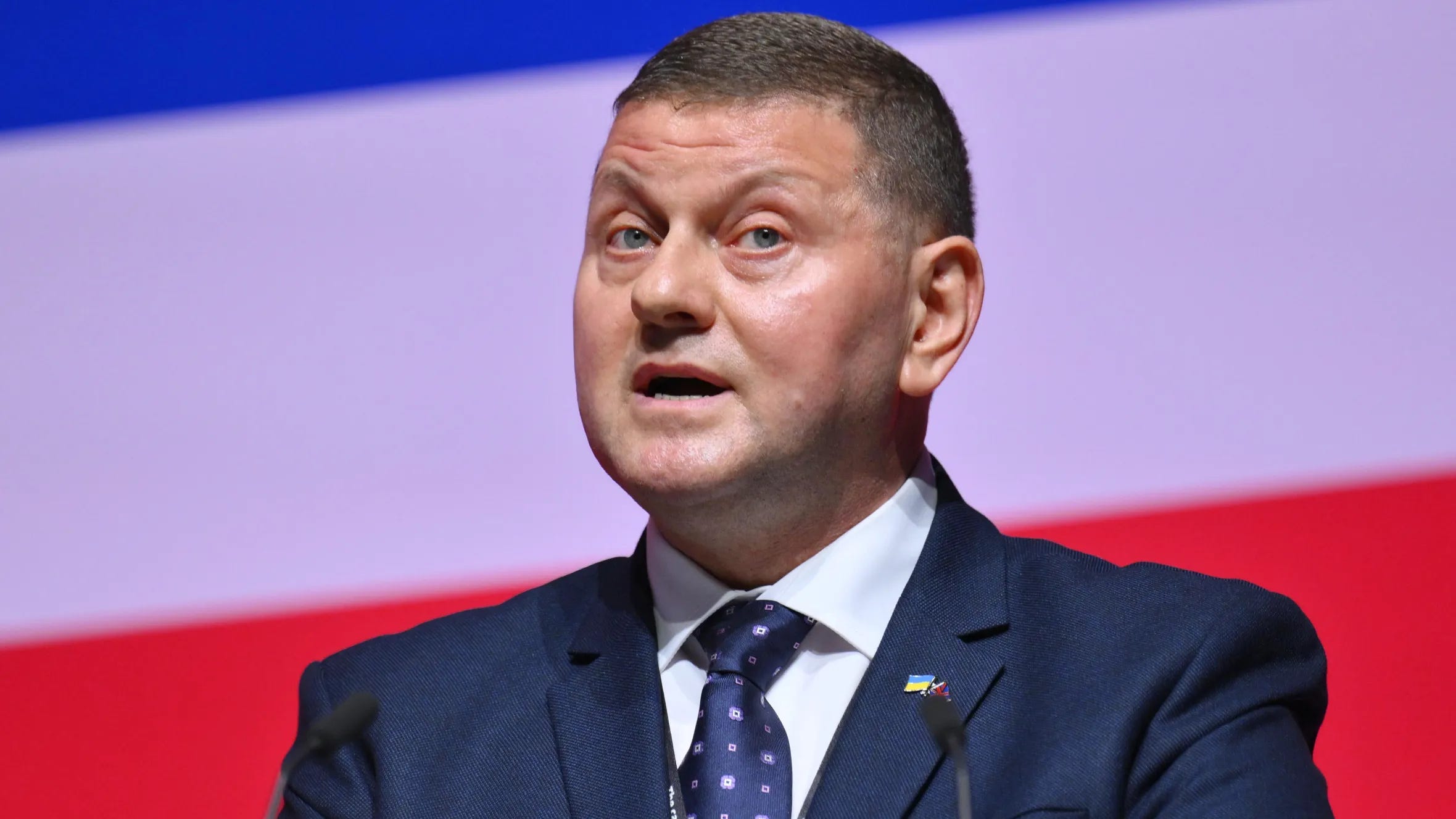
All this was hinted at recently by former commander-in-chief Valery Zaluzhny, who wrote that Ukraine’s long-range strikes, despite all the hype, ‘are expensive, technologically complex, and ultimately provoke countermeasures’.
All wars are ultimately economic and logistic.
Will’s excellent report underscores the enormous gap between the Western “narrative” which is largely based on Ukrainian fictions, and what appears to be really happening.
Basic point : Ukraine is bankrupt and depends on money from Europe and the US, who hope for a “negotiated” settlement which will all so them to get their money back by plundering Western Ukraine’s natural resources .
The problem with that is Ukraine and NATO’s terrorist strikes will result in their being no Ukraine left to plunder!
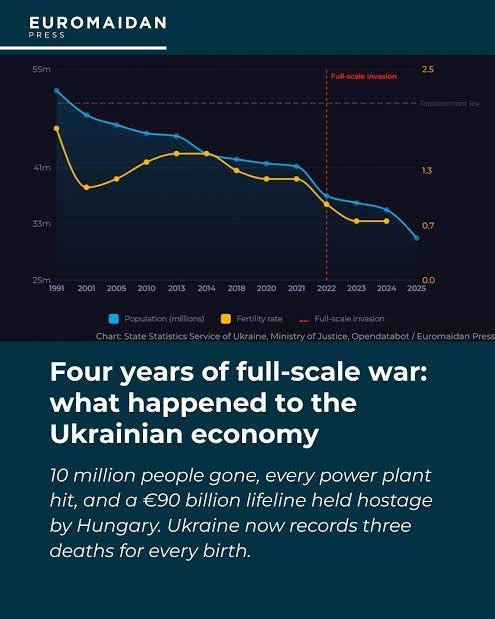
All this money that has gone to Ukraine will have vanished through a black hole of corruption and greed and incompetence from this financial universe. Western economies will follow.
Russia is aware of the dynamics; hence its new tactics.
If current deep-water shipping blockades extend through the full season, the total maximum financial impact approaches $14 to 15 billion. Strikes on infrastructure throughout Kievan Ukraine will cost at least 10 billion to fix. So add 25 billion and the 12 billion spent on drones and you have a massive 35 billion in losses. Not counting losses on the battlefield, which are also economic as well as human.
In Russia, official figures boast a 10.2% increase in non-oil and gas revenues: Russia’s economy is successfully diversifying away from pure energy dependency.
Ukrainian sources say that the Russians have lost about $15 billion calculated on the basis of 160 successful strikes in 2025 This is taken as Truth in the West. But as Schryver points out the Russians are destroying over 98% of what is being thrown at them. Neutral OSINT sources support this saying 160 translates to 16 or 17.

Supposing that is correct (one never knows for sure!) divide by 10 and you get not $15 billion but $1.5 billion. Still a lot of coffees, of course.
As I wrote yesterday, however, Putin’s reforms and restructuring has yielded impressive results : in 2026 the non-energy sector increased by over 10%. In the same period, oil and gas windfall profits according to neutral OSINT sources are calculated to be about 15 billion.
I hate numbers. But in this case, they point to a simple fact: Russia is economically strong and getting stronger. It will continue to do so if the US acts on the Russian sanctions bill, if used in the form Lindsay Graham intended will accelerate the West’s descent into that financial Black Hole that Kiev calls home.
Russia and China are endlessly adaptable.
Despite heavy Western tech embargoes, Russia successfully circumvents technology controls to secure critical parts for its energy infrastructure. Specialized parts, control systems, and electronics are systematically rerouted into Russia via intermediary nations like China, Turkey, and Central Asian states.
Russian state firms have successfully reverse-engineered routine processing machinery. While highly sophisticated secondary units (like isomerization and hydrotreating) remain difficult to fix quickly, Russia’s energy giants are adept at rapidly rebuilding standard primary atmospheric distillation towers within weeks.
Russia also minimizes the systemic impact of infrastructure damage by immediately shifting its energy logistics to underutilized or alternative networks.
When a localized refinery is knocked offline, Russia simply redirects the unprocessed crude oil directly to its western or Baltic export ports. This minimizes the financial impact on state budgets by maximizing raw crude sales abroad.
To bypass restrictions and absorb Black Sea disruptions, Moscow relies heavily on its comprehensive shadow fleet of oil tankers. This allows them to quickly shift maritime export routes away from targeted ports (like Novorossiysk) to safer northern shipping lanes.
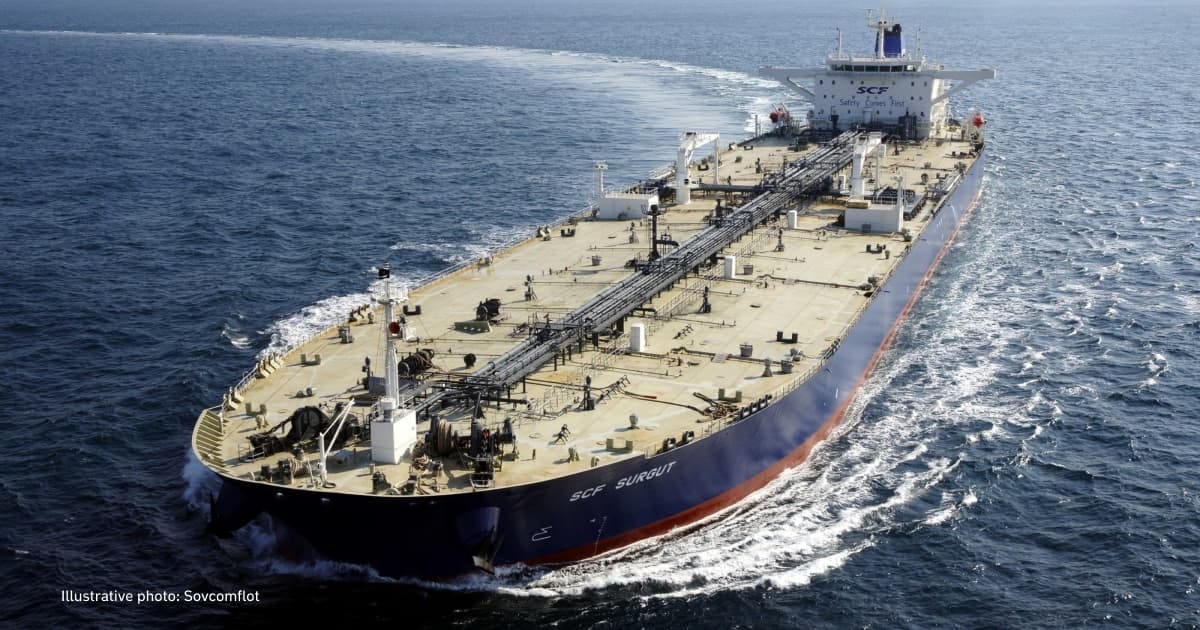
Moscow’s version of state capitalism means preserving the energy sector is a military priority, and it is reallocating massive financial and tactical assets to guarantee survival.
The Kremlin has actively pulled elite air defense assets directly off the front lines, redeploying them deep inland to form protective umbrellas around vital industrial zones and refinery clusters.
Most important is creativity.

Rather than relying purely on fixing Soviet-era legacy networks, state-backed entities like Rosatom are commissioning vast new megaprojects—such as the massive 300 MW Novolakskaya Wind Farm as well as developing new refining technologies in concert with Iran and China.
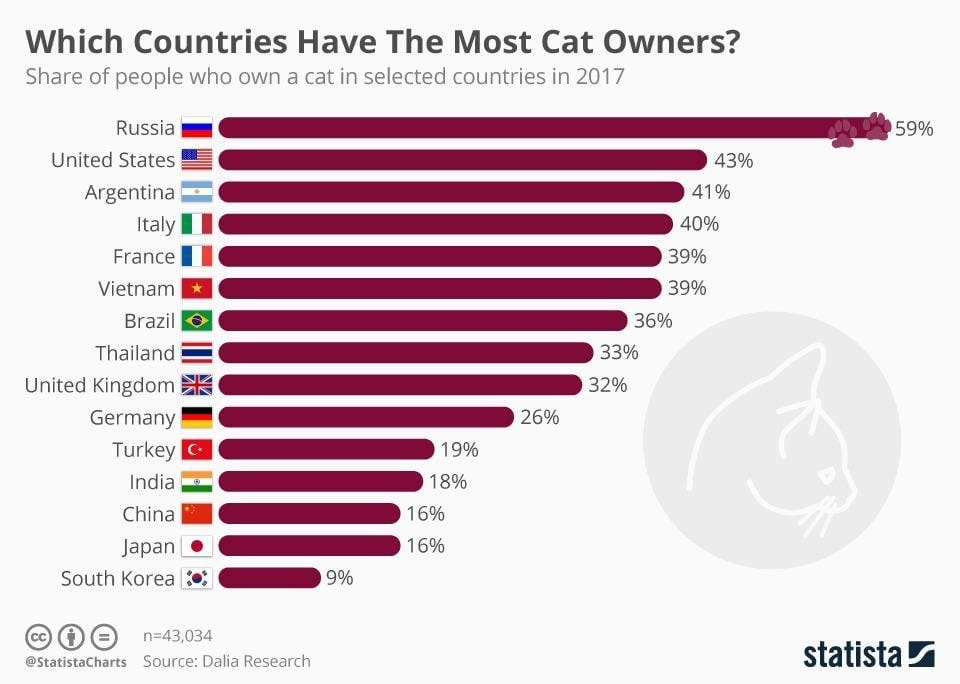
Russia loves Chappy and Ichi!
Support New Forensics
Cats like people who are like cats and let a cat be a cat. Does this mean Russians are like cats? Is Putin a little cat-like.
All too difficult for me.
Please donate to support Chappy and Ichi and their Canuck thing, Julian, by clicking on the graphic or the url below.

I would really like to get to 5000 subscribers. If you like my work, share the urls on other blogs and sites and in comments on podcasts.
Show us you care by buying us coffee at https://buymeacoffee.com/julicow
Canada will be affected by dumping billions of dollars into the Ukraine War. Mo return on its investment into E.
"Dispersal Engineering" may soon be a thing:
The art of spreading assets and infrastructure around, so as to minimize the effects of bombing