Chavismo Wins
It never fell.

The kidnapping of President Maduro is touted as a huge victory for the US - and for that stable genius with his 73 point IQ, Donald Trump.
But Maduro is just one person. He is not Chavismo. Never was.
Chávez repeated over and over “Chavismo is the people”— that it was a revolution driven by the will of the impoverished, the marginalized, and those who work in factories and fields. He emphasized that it was not about him personally but the goals of Bolivarianism, anti-imperialism, and 21st-century socialism— goals shared by a broad coalition of military actors, historical left-wing parties, and civic organizations.
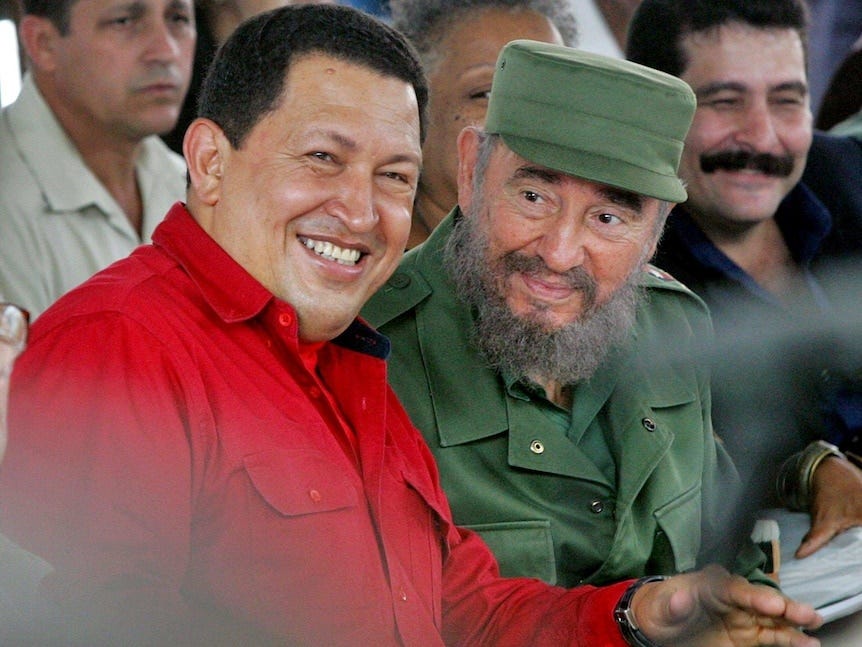
I feel sorry for Maduro. But he will eventually be released probably into exile, where he will live comfortably as a Venezuelan hero.
In the long term, Chavismo will triumph. The party holds a dominant supermajority in the Venezuelan National Assembly, controlling 256 of the 285 seats (roughly 90%).
The Americans don’t understand the ideology but they understand power and dominance — in this case that f the United Socialist Party of Venezuela (PSUV) and the Great Patriotic Pole (GPP) coalition. Maybe, simply they don’t understand democracy, which was Chavez’s biggest gift to Venezuela along with literacy and education.
The problem with declining empires is they are locked in a box. They can’t see the world outside. Nothing works out as it is supposed to. They think individuals make all the difference because in empires it is always the emperor and his courtiers. Delusions build upon illusions.
So, in mid-May 2026, when Trump told media outlets that the United States had made a “fortune” from Venezuelan oil following the kidnapping of President Maduro, he was covering up huge losses incurred by the US inadvertently paying for the Bolivarian Republic’s rebirth.
This is a case of wishful thinking triumphing over basic arithmetic, twisting facts. .
Trump claimed that Venezuela had generated more revenue in the few months following the intervention than it had over the previous ten years, likely true since Venezuela was suffering from extreme sanctions and economic pressure and it just didn’t have the money to fix its infrastructure.
“25 Times Over”
Trump was at pains to emphasis huge profits from his success with the raid on Caracas.
In late May 2026, Trump said that the U.S. had taken so much oil out of Venezuela that the revenue has “paid for the cost of the war on Iran about 25 times over”. The Pentagon estimates Iran has cost roughly $29 billion, but …the true overall cost to the U.S. economy is estimated to range between $630 billion and $1 trillion.
I’m not good at arithmetic but is something wrong here?
Immediate profits
Following the kidnapping of Nicolás Maduro in January 2026, Trump announced Venezuela’s interim authorities would turn over 30 million to 50 million barrels of high-quality oil directly to the United States estimated to be worth roughly $2.8 billion. These funds would be kept in U.S-controlled accounts to benefit both the U.S. and Venezuela.
The Revenue Reality:
Verified gross export revenues since the intervention sit closer to $1 billion to $2 billion which does not offset the bottom-line $4.7 billion spent on U.S. military deployments in the region, let alone the understated $29 billion Iran conflict baseline. By the end of 2026, the Venezuelan adventure, counting hidden costsm could add on an extra $9 billion.
Profits for the US . Caveats
Under Executive Order 14373, oil revenues are legally held in designated U.S. Treasury and neutral foreign accounts (like Qatar) as Venezuelan sovereign property protected from commercial lawsuits, That means they cannot be directly absorbed into the U.S. Treasury to balance domestic military deficits
What are the profits from the sale of Venezuelan oil so far?
Since the U.S. military intervention and the subsequent establishment of a transitional energy pact in January 2026, U.S.-guided sales of Venezuelan crude oil have generated over $1 billion in gross revenues.
Because state oil company PDVSA operates under tight financial trusteeship and severe infrastructure backlogs, international energy trackers monitor these figures as gross export revenues rather than net commercial profit.
Current Revenue Flows and Immediate Projections
Cumulative Sales to Date: U.S. Secretary of Energy Chris Wright confirmed that initial sales surpassed the $1 billion mark shortly after the transition.
Short-Term Backlog: The U.S. has secured short-term agreements for upcoming shipments that are projected to bring in an additional $5 billion over the next few months.
Full-Year Target: Total gross oil export revenues for Venezuela are “expected” to surge to $22 billion or more by the end of 2026, up from the $18.2 billion generated under sanctions pressure in 2025. “Expected” by whom? The Trump people, of course. The oil industry is not so sure.
Where the Money is Going
Under the current U.S. Treasury Department oversight framework, the generated funds are being meticulously redirected to prevent state collapse and stabilize the local economy: Translation: the US fears Chavismo.
The First $500 Million Tranche: The Trump administration completed its first flagship sale valued at $500 million in mid-January 2026.
Currency and Wage Stabilization: Interim President Delcy Rodríguez confirmed that Venezuela’s central bank has directly received $300 million from that initial tranche. These funds are being injected into the local foreign exchange market to prop up the Venezuelan bolivar and finance emergency income support for workers (Chavistas).
Logistics benefit:The revenue surge is driven by a massive logistics shift. Venezuela’s oil exports jumped 14% to 1.23 million barrels per day (bpd)—the highest level since 2018.
Market price benefit: Instead of being heavily discounted and smuggled to China, the heavy crude is being routed under official licenses directly to U.S. Gulf Coast refineries, India, and Europe where it fetches much higher market pricing.
The Upshot: Venezuela’s victory
Immediate financial benefits.
Sanctions off, positive national cashflow benefiting workers, which naturally strengthens Chavismo — which is (as I keep on saying) workers!
Repair of Infrastructure at US expense
It is the US paying for repair of Venezuela infrastructure, which is a long term commitment, but the oil and ultimately the infrastructure are sovereign property. Once that infrastructure is functioning— which will take time— but will be eventually complete, the geopolitical situation will be different.
The US will be weaker and Venezuela stronger. Chavismo continues useful work at the grass roots, taking advantage of the huge divide between the small but affluent white-ish minority and the majority of the brownish population which Chavez liberated through housing, education, healthcare and projects that emphasize cooperative progress.
The US naturally does not pay attention to the ongoing social revolution, which is a new iteration of socialism. It does not want to see this, since its success threatens American assumptions. And it assumes that the capitalism will triumph.
Venezuela has changed since when Chavez came to power. The fact is that this is a country rich in resources which were once controlled by small pro-Western elites.As Chavez sought to enfranchise the marginalized of Venezuela, the West sought to prevent him, with punitive sanctions and financial piracy.
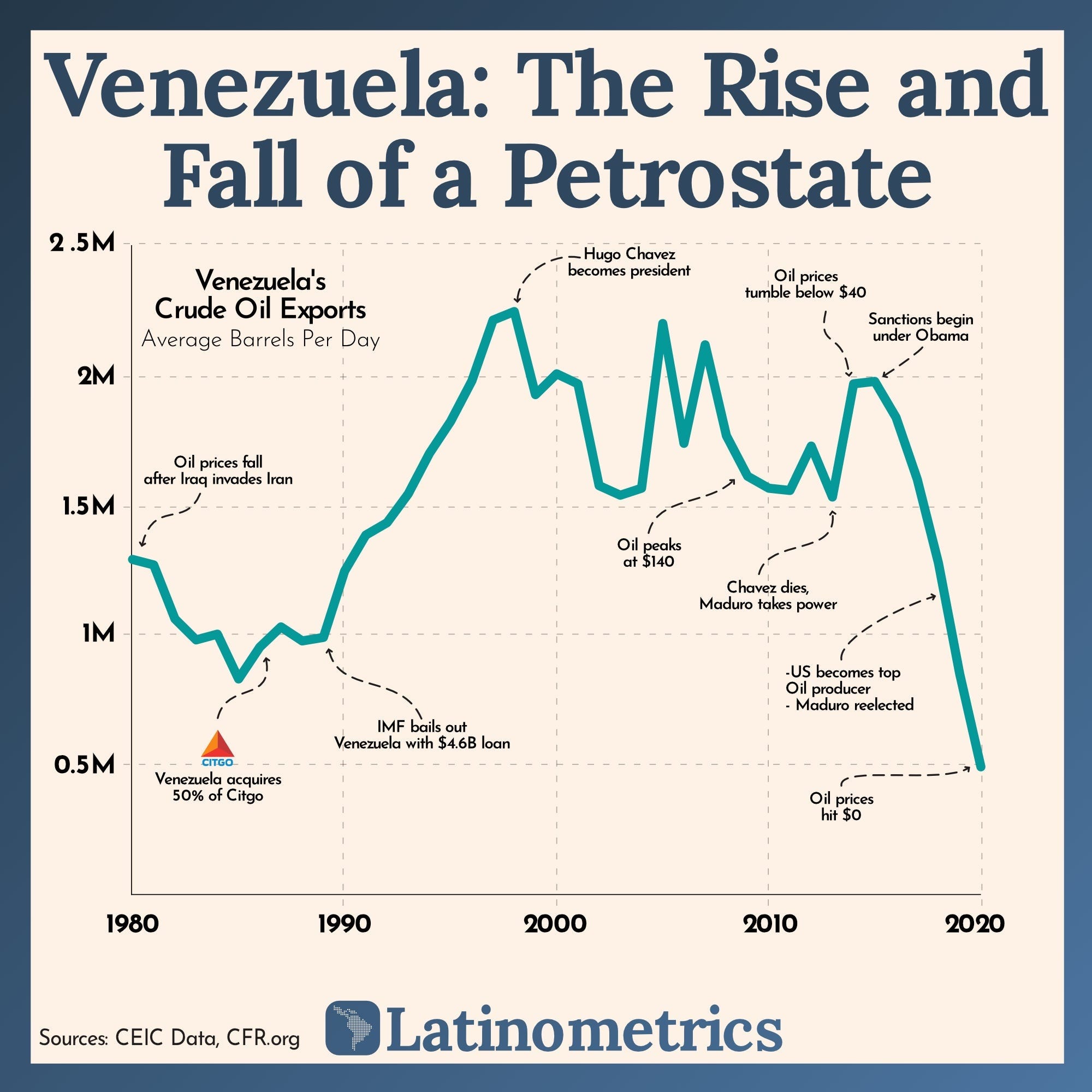
But Chavez had gifted Venezuelan with an indigenous ideology that has its roots back in history before Europeans appeared. Its collectives emphasize autonomy, adaptability, and community, especially important in rural areas but transplanted to urban settings have power, there also. Chavez showed the poor how they could leverage local community unity to survive. N
ow Chavismo dominates politically. And with sanctions out of the way to ensure Trump profits, the people will once again come into their own.
American hegemony will not last. And watch Venezuela reject American rule.
As you know, I am “on the spectrum’, which means a lot of things.
It seems that a rather large number of my supporter are also like me, keeping in mind that “ASD” is not one thing. That said, whatever their differences, 70 to 80 % of ASD people have one of the 3 or 4 different types of ADHDs.
One common problem is trouble with Mornings, partly as a result of low dopamine and delayed cortisol release. This was always — and still is — a big problem for me.
It ‘s also a problem for other people.

Help Ichi and Chappy and their Canuck Chavista, buying us coffee at https://buymeacoffee.com/julicow.
Today’s post for coffeebuyers.
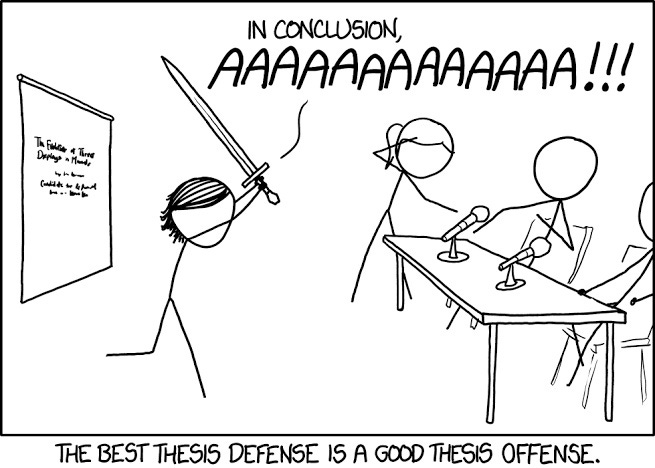
It seems that the Russians want to do away with theses in college, thanks to widespread cheating with LLM where people just get the LLM to write their paper. The substitute oral exams / thesis defense. So……..19th Century.
But that’s what I had to do.
My dear friend, I truly love your articles, but when you talk about Hispanic America, just like the rest of the Europeans, you have no idea what you're talking about. I've lived my whole life in Argentina, "enjoying" the "benefits" of "social justice" and seeing how politicians like Chávez and Castro bring "happiness" and "prosperity" to the people. In truth, none of you writing from abroad would survive more than five minutes of this "happiness." You'd flee in terror. That said, I'll continue reading your articles carefully. Best regards.
Great post!!!