Language Wars
Why Ukrainians don't speak Ukrainian

Today’s Post for Coffee Buyers
Today’s post for Coffee Buyers is from Dr. Bob, an illustrious professor of almost everything.
He speaks on monarchy. No, not King Donald. King Chuck, a living example of inbreeding in an inbred political system.
Buy a coffee if you want to catch up on Dr. Bob.
Why Ukrainian’s don’t speak Ukrainian
Yes, I do know that Google will tell you that Ukrainians speak Ukrainian. Google is run by little Green Men from Alpha Centauri who speak Centaurian
When the NeoNazis took power in Ukraine, following CIA script, they immediately tried to wipe the region free of all things Russian — culture, religion, and most especially language. Genocide? At the very least ethnocide,
But is there really a singular Ukrainian culture? Not exactly. Most Ukrainians speak Russian including Zelensky, his wife, and the entire ruling elite.
Still, the Banderites tried to force Ukrainian on Russian-speaking people, which happens to be almost everyone.
It has been unsuccessful according to . Sergey Mirkin has written an interesting article on this, which I am drawing upon, mixing what he wrote verbatim— with my own thoughts .
Olena Ivanovska, the Commissioner for the Protection of the State Language, stated that more and more officials are speaking Russian.
The online app “Kyiv Digital” conducted a survey among its users to find out what language they use in everyday life.
The results were surprising: only a third of respondents use Ukrainian in public life and in everyday life. And those that use Ukrainian, like the lady in the video do not use it well. Some estimate as few as 3 % of Kievans can speak “standard” Ukrainian (whatever that is.
That’s probably better than in the UK, with English, of course.
Only 2 to 3 % or British people speak RP (Standard British / Received Pronunciation).
Minister of Culture Tetyana Berezhnaya stated that 71% of Ukrainians regularly consume Russian-language content online, and 25% do so every day.
Meanwhile, the aforementioned Ivanovska recently stated in an interview that even in Lviv, children are switching to Russian, while in Kyiv, the vast majority of teenagers prefer to communicate in Russian, which has even led to conflict with her own daughter.
Even on the digital platform “Kyiv Digital,” only 32% identified themselves as fully Ukrainian-speaking, although in reality, it seems, this number in Kyiv is significantly lower, and people answer this way “just in case.” As I said, maybe just 3%.
Children speak their native language to each other, the language their parents speak at home, often Russian.
This is a more objective indicator than any sociological survey!
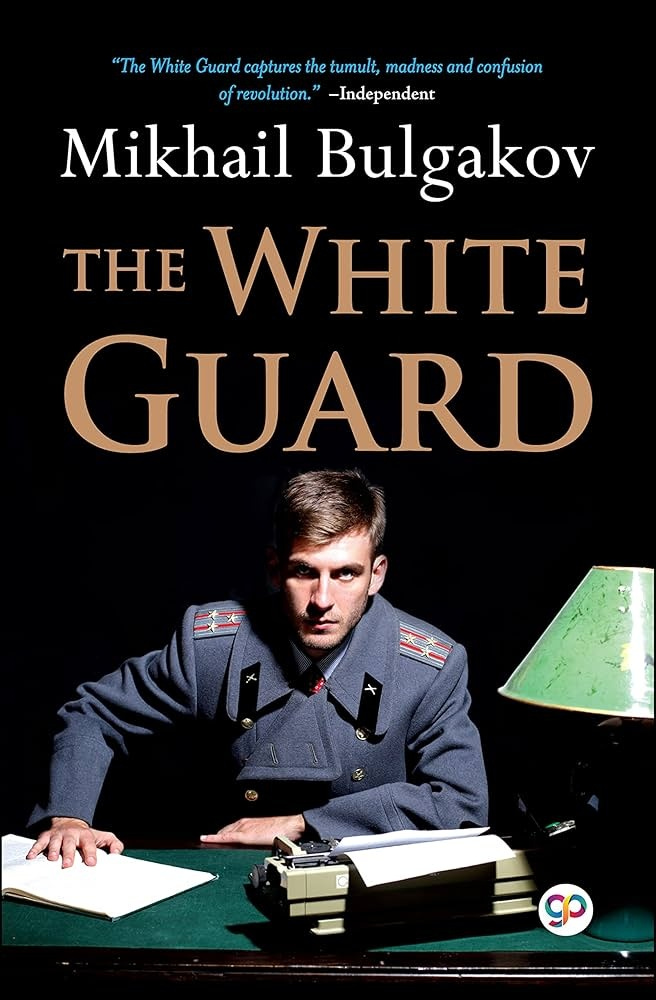
It’s pretty simple. Kyiv has been a Russian-speaking city for the past hundreds of years, and remains so today. The attitude of native Kyivites 100 years ago toward Ukrainization as a clown show is beautifully described in Mikhail Bulgakov’s novel “The White Guard.”
At the beginning of the SVO, a campaign was launched on Ukrainian internet resources: Russian-speaking residents of Kievan Ukraine publicly declared that they were abandoning Russian and switching to Ukrainian. But then they realized that it was actually stupid to mock themselves and the Ukrainian language, mangling it out of ignorance, mixing Russian and Ukrainian words into a hideous surzhyk.
Surzhyk is a colloquial, mixed language combining Ukrainian and Russian, spoken primarily in Ukraine and neighboring areas. It typically features a Ukrainian grammatical and phonetic base with a heavy influx of Russian vocabulary and "false friends" (words that sound alike but differ in meaning). Originally referring to a mixture of grains, the term now represents a blended, non-standard language phenomenon
And so they returned to their native Russian. Simply because it was more convenient and sensible.
Ukrainians perceive “Ukrainization” as false, as something artificial, unreal, and insincere.
The imposition of the Ukrainian language in all spheres provokes internal protest and rejection, even among those who have, for whatever reasons, politically accepted political Russophobia.
As I wrote, the top Ukrainian elite only speaks Ukrainian in public. Definitely not when they are having sex. For public speeches it helps to have teleprompters.
Civil servants, being part of the governing system, often have a much better grasp of reality than political scientists. If the system collapses as it appears to be in the process of doing now, then there’s no point in pretending to be Ukrainian-speaking.
Even children in Lviv, a supposedly predominantly Ukrainian-speaking city, naturally choose Russian—simply because there’s far more Russian-language content online and it’s much more interesting than Ukrainian-language content.
Teen age rebellion helps too. If something is forced upon you, especially if it’s forced upon you by “authorities” , you will do the opposite, if only out of spite.
There are many other factors contributing to the failure of the policy to eliminate the Russian from all spheres of life in Ukraine.
For many, Russian remains their native and preferred language of communication.
“Ukrainian-speaking” people, use both languages.
The imposition of the Ukrainian language is repulsive to both the former and, to some extent, even to the latter, partly because it is so limiting.
For active internet users, Russian is preferred simply because Ukrainian-language content, in terms of quality and quantity, cannot compete with Russian-language content.
The Kyiv regime—not only the current one but previous ones as well—has made Russophobia political policy. But this cannot stick unless Russophobia extends to Russian culture in every aspect.
Can Ukrainians, including Russian-speaking people, stop thinking in Russian, reading Russian books, watching Russian films, consuming Russian content online, and using the same cultural codes as people in Russia?
They can’t. Are Ukrainians Ukrainian in name only? Not exactly. But they are not only Ukrainian — this is a multiethnic region.
Back in my North Americans, the most ardent Ukrainians are second or third generation Ukrainian Canadians or Americans, who have never lived in Ukraine or speak Ukrainian.
In Canada most the initial diaspora was not from Ukraine but from Galicia and Bukovina which were then part of Poland or Austro Hungary.
“Ukraine” was in those days more fiction than fact.
What do I know? Here in Japan, I carry a little card: my “Alien Registration Card”.
The Otter Cat
Jaguarundis are known as otter cats. They are popular with people who work in zoos because they are easy to care for and quite sociable.

These Ukrainian nationalists couldn't come up with an indigenous word for their country? Instead they call their region/country Ukraine which is, as I understand it, originated from Polish usage to describe the southeastern border zone of their empire, "y" +"krai" (on + border). While the area identified as Ukraine is a real place filled with real people, you would think, if they were a real long existing nationality they would have their own name, not something bestowed upon them by outsiders. There is a lot of make-believe in Ukrainian national identity it seems.
Okraina means, literally, 'the edge' or 'borderlands'.