War on Sunday
Will things get worse on Monday?

It’s Sunday here in Tokyo.
Lindsay Graham is dead. Good riddance. What a terrible thing to say! But he was a terrible man. And hopefully, he will be replaced by a better person.
Sunday or not, — so much is happening. Sometimes I feel like geopolitical events are just one big cat toilet—cleaning, scooping, then the next day doing it all over again. No rest for the Toilet Guy.
The war goes on in Iran. And the information I found on new weapons like prSM missiles, prompted me to look again at digital surveillance systems and their applications and think about the collaboration between Russia, China and Iran in this area — and then the differences between the mentalities of these countries and that of the “West”, whatever that is, if it even exists as one thing. Maybe the “West” is not a thing but a condition — a sickness.
War on Russians, starting with Maidan, if not before. War on Palestinians. Genocide. Iraq, Afghanistan, Libya, Syria, Lebanon. now Iran. War, war, war. And in these wars, we increasingly distance ourselves from the suffering. Now we will delegate it to robots and AI, not considering what goes ‘round, comes ‘round .
This is the wired world.
We are the Borg.

You will be assimilated.
Iran pounds US military sites in Jordan, Kuwait, Bahrain, Qatar & Oman
♦️ Prince Hassan Airbase in Jordan was hit with a barrage of ballistic missiles. The strikes specifically hit MQ-9 drone hangars and the command and control center.
♦️ A fighter jet maintenance and repair hub at Al-Udeid Airbase in Qatar was struck with ballistic missiles. The base’s command headquarters was also hit in subsequent strikes.
♦️ A second US vessel was struck and disabled in the Strait of Hormuz.
♦️ A heavy surprise attack hit logistical support centers and refueling platforms for US aircraft carriers at the Port of Duqm in Oman. The sites were “destroyed” in the attack.
♦️ Drones targeted a Patriot missile system, ammunition depots, and radar sites of US forces in Kuwait.
♦️ In a separate wave, drones struck the communications system and radar sites of US forces in Bahrain
US strikes
Let’s start with Iran. The US has carried out a third round of strikes. Will Schryver says that these strikes are “high intensity” although the US does not have the resources for prolonged strikes like this. He is right—with a caveat—the lack of resources and the strength of Iranian defenses already limit and degreade the level of intensity.
The strikes are mostly in the south tip of Iran and carried out with standoff weapons, with poor targeting – such as those 60 naval vessels that turned out to be mostly, if not all fishing boats. The attempt is to weaken Iran’s abilities to control entry into Hormuz.
So far a failure.
Where are the attacks coming from?
Of course, I guess from the carriers,. But Iran’s heavy bombardment of US bases like the Isa base indicate that the US is making use of HIMARS, which was not so successful in Ukraine and the new prSM missile system replacing ATACMS .
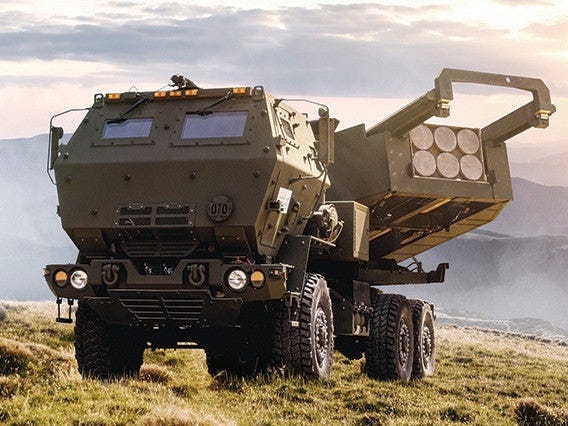
Both American systems rely on GPS. Iranian EW will jam it, of course – and they can continue without it, degrading accuracy and reducing damage of Iranian assets
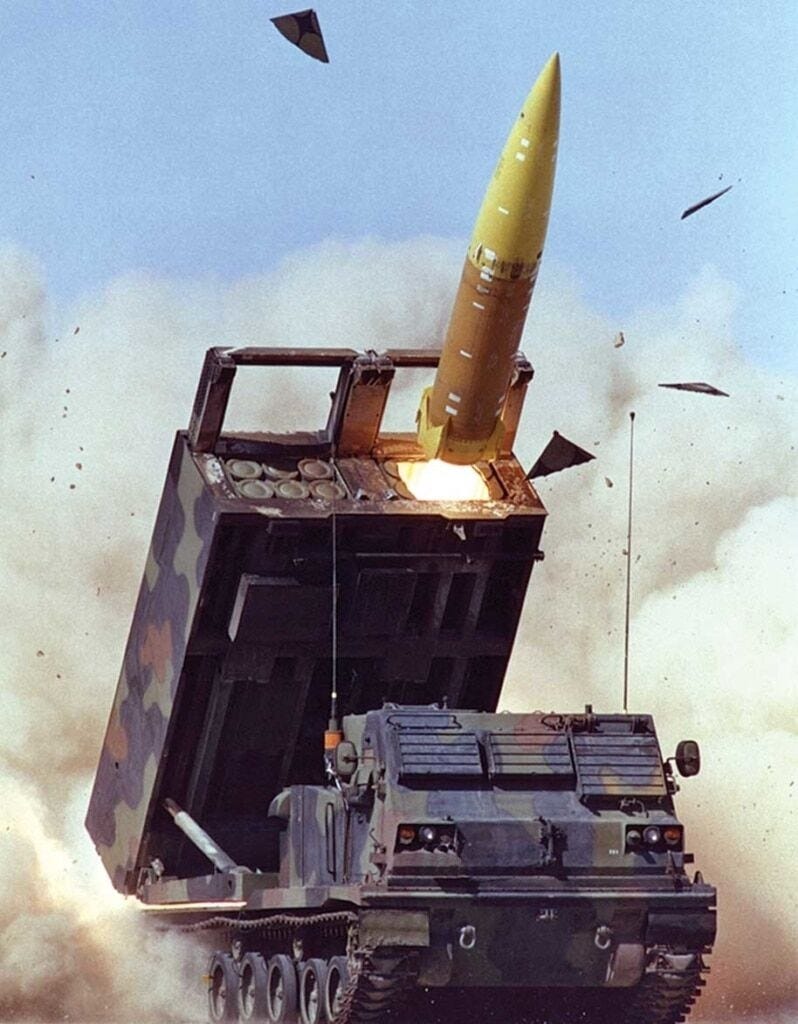
Although the Americans are likely using “shoot and scoot” tactics, for both systems, they are both big and ugly, mobile but not all that fast, and stand out in the desert. Iran can track and destroy them, although with difficulty.
Satellites.
Standard optical satellite imagery can easily spot a parked HIMARS, say, at Isa Air Base.
However, because satellite overflights happen at fixed intervals, space-based imagery cannot track a truck driving down a highway in real time. So…..
The Drone Hand-off:
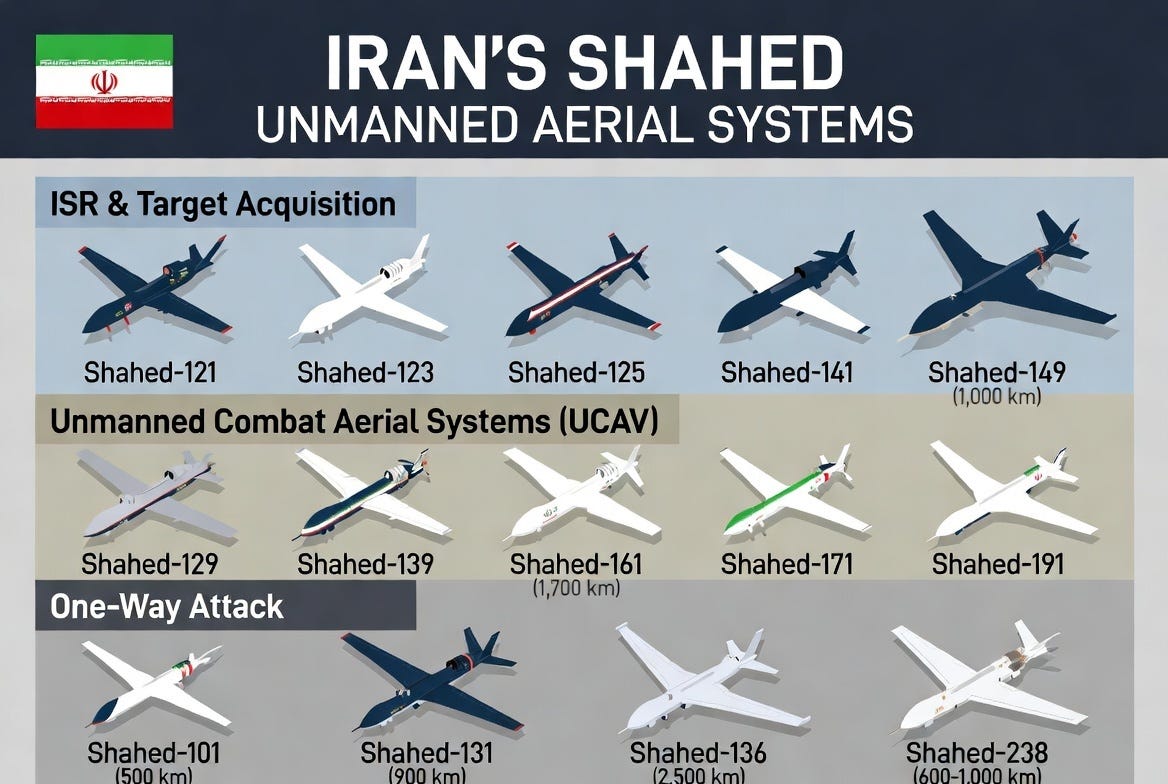
Chinese SAR (radar) satellites first flag suspicious vehicles or staging footprints in Bahrain.This data is passed to Iran, which dispatches local loitering surveillance drones to pinpoint the moving truck visually.
The Unjammable Guidance Edge
If an Iranian drone or satellite does spot a HIMARS, BeiDou gives Iran a massive upgrade when it fires back, defeating Western jamming. During previous conflicts, Western electronic warfare successfully jammed the commercial GPS signals guiding Iranian weapons. BeiDou’s military-tier “B3A” signal, however, uses complex frequency hopping and message authentication, making it virtually immune.
Two-Way Retargeting:
Unlike GPS, BeiDou features a unique Short-Message Communication system so Iranian command centers can send data directly through the satellites to update a drone or missile’s trajectory mid-flight. If a HIMARS moves to a new “scoot” position, Iran can redirect its drone while airborne.
Local, on -the-ground intelligence also helps. There are a lot of Shi’a in the GCC.
The New prSM (Precision Strike Missile)
In the case of prSM, the missile proved initially successful. Compared to ATACMS, It has longer range, is faster – (roughly 2,300+ mph and can maneuver. The early Chinese systems were not equipped to handle this – although the S400 is.
CENTCOM will of course exaggerate successes. To hit Southern Iran the prSM missiles are at the limit of their range and take 6 to 8 minutes at Mach 3.
To shoot it down, it needs to be intercepted some distance from target in its ballistic trajectory, some thing that the S400 or S300 could theoretically do. But that means early detection.
By now, we can expect the Chinese to have upgraded their systems and so have the Iranians, theirs.
These new weapons are a challenge.
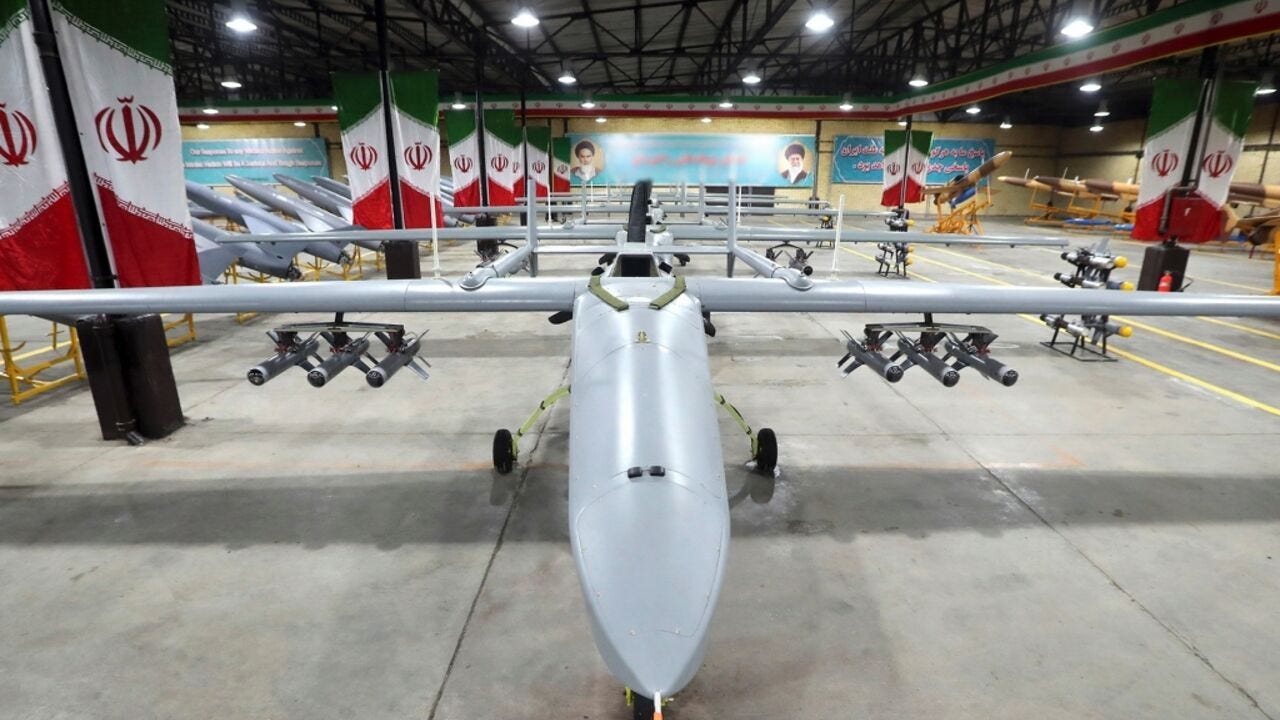
But in a war, each side is usually producing new challenges, and the other side must respond so the side with the better engineers and the most adaptable industrial base wins because it can respond faster. Here Iran has an edge — it has proven it can adapt and respond—faster and more pragmatically.. An area of special dominance is drones— with new drones of all types, increasingly “stealth drones”, with extensive range or loitering abilities, useful for a range of missions from strikes to surveillance.
The longer his war continues, the more muscle Iran develops. But sheer strength doesn’t win in combat — the smarts does.
Take Russia
Russia is good example of existential adaptability. It understands - or at least Putin does — that Ukraine is just a stepping stone to war with the West - with NATO and possibly the US. It doesn’t want war, of course. It still remembers the cost of WWII. But to avoid something like that it has to be prepared to fight - and to win.
Strength in this definition equals deterrence. System like prSM systems could be major threats in a conventional war, which would mean having to escalate to nuclear weapons.
So, Russia has moved fast to render such systems less of a tactical threat.
Air Defense (AD) Upgrades
Russia’s air defense strategy focuses on shortening reaction times, increasing target-tracking fidelity, and enhancing both high and low altitude interception capabilities.
AESA Radar Integration:
Older Russian systems relied on passive electronically scanned array (PESA) radars.
Russia has begun retrofitting S-400 and S-350 complexes with Active Electronically Scanned Array (AESA) radars with faster beam steering, allowing fire control to lock onto hyper-fast ballistic targets in a fraction of a second.
S-500 Deployment:
Russia is actively routing the S-500 system into full service.
Unlike the S-400, the S-500 is specifically designed as a strategic interceptor meant to target low-orbit satellites and hypersonic weapons.
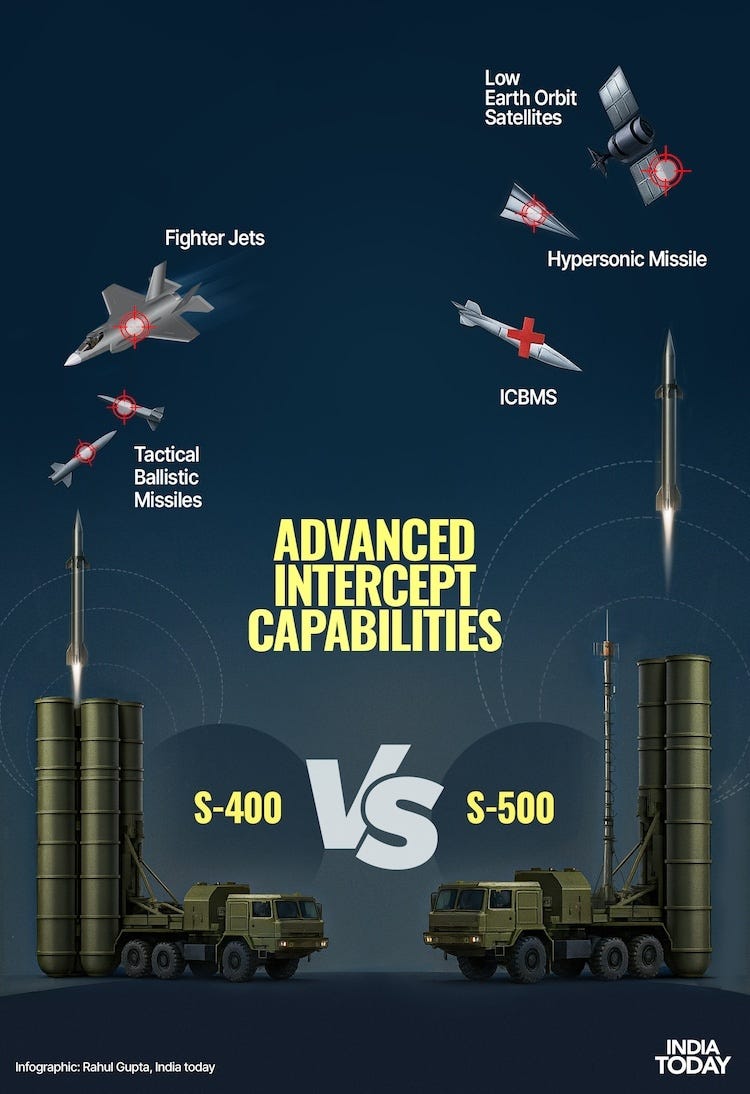
It uses dedicated anti-ballistic missile radars (like the 77T6) optimized for the high dive angles typical of a prSM attack profile.
40N6 Extended-Range Interceptors
Russia has prioritized mass production of the 40N6 missile for the S-400m features an active radar homing head, allowing it to climb to an altitude of 30–35 km and dive onto targets from above, bypassing a missile’s low-altitude horizon defenses.
Improved Sensor Fusion:
Russian command posts have overhauled their network architectures. Information from early warning radar networks is now fused directly into point defense systems (like the Pantsir or Buk-M3).
This gives local units an automated target tracking handoff before the missile even enters their physical line of sight.
ISR Upgrades
To find mobile platforms‘ like HIMARS’ before they launch and track missiles mid-flight, Russia is revamping its orbital and atmospheric tracking capabilities.
Synthetic Aperture Radar (SAR) Satellites
Cloud cover and night tracking can blind imaging so the new Obzor-R radar satellite constellation uses SAR to see through weather and darkness, to track mobile launchers
Tundra EKS Constellation
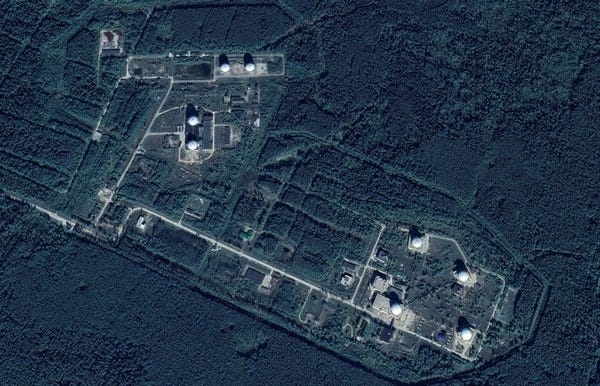
New Tundra satellites have been added to the Unified Space System (EKS).to look for the thermal energy of infrared plumes, providing near-instantaneous notification of a prSM rocket motor ignition directly to air defense command posts.
Tactical Drone Reconnaissance Networks
Automated data-links embedded into long-range reconnaissance UAVs (like the Supercam and Orlan variants) stream target coordinates directly to strike systems in real-time, for shorter strike execution.
Cooperation
If the Russians are prepared ,you can be sure that the Chinese are too. The US has given Taiwan both HIMARS and ATACMS, so you can expect them to eventually provide prSM batteries .
Now consider the extensive cooperation between Iran, Russia and Iran and Iran’s own considerable capabilities in advanced engineering and the like –not to mention, the factor of motivation. Russia, China, and Iran all face existential challenge, which the US does not. They have all shown that they can respond much faster.
The US has natural resources. What it lacks are industrial resources. And also human capital. It needs fewer MBA, economists and political scientists and more engineers.
It also lacks a sense of existential threat, which both Russia and China have. The US has never been invaded. Never lost millions of their people fighting on their own soil.
”War” for them is a Hollywood movie.
This leads to unrealistic plans and unrealizable technologies, big, too complex, impractical, designed in the end to make money for a few billionaires. The same disease has spread to Europe and NATO preparing for war with a threat that does not exist.
The current fad is AI. While the Russians and Chinese develop AI for its practical implementations in fields such as traffic control, education, factory automation, healthcare, automation, communications and de-bureaucratiztaion, the US develops it for increased financialization and the profit of a few, which means the more complex the better. It doesn’t matter if it actually works.
In war so far, it’s failures have been huge.
NATO has picked up the technological “gain of function” disease.
NATO AI Warfighting Grid & “Kill Web”
A PR video…. You don’t need healthcare, education, etc., you need a Kill Web! Buy one now.
Not to worry, humans are in control. Not that they understand at all how the system works.
NATO is working to develop toward a unified, automated data ecosystem that will manage all aspects of the coming war with Russia.
The AI “Kill Web”:
Announced during the July 2026 Ankara Summit, this system aggregates data from satellites, drones, and ground sensors across the 1,340-kilometer Finnish-Russian border using AI to track Russian troop movements in real time, compressing decision-making windows from hours to seconds.
Next-Gen Sensor Fusion: NATO selected next-generation AI software platforms—most notably the Israeli related American company Anduril’s Lattice platform—to fuse real-time data from disparate air traffic control, surveillance, and missile defense networks into a single, autonomous operating picture.
Early Threat Detection: Emerging AI-enhanced radar systems are being deployed to combat hypersonic threats, successfully reducing missile detection times by 25% and projected to improve intercept success rates by 15%.
Caveats:
No Russian threat. If the Russians did attack it would not be a massive conventional attack with troops and tanks but missiles. Everything depends on data and a miscalculation such as already occurred numerous times with AIs would be catastrophic and could escalate the conflict to nuclear war.
Reduced missile detection times are useless against hypersonic threats
Autonomous First-Line Defense
NATO is building zones where machines, rather than human soldiers, will absorb the initial shock of an enemy offensive.
Robotic Border Buffers: On the Eastern Flank, specialized zones are planned where the primary line of defense consists entirely of unmanned aerial vehicles (UAVs) and ground robotic complexes. These autonomous systems are designed to engage and exhaust an advancing force before human troops are put in harm’s way.
The “Drone Edge” Initiative: Backed by a $40 billion investment launched in July 2026, this program scales counter-drone technologies and mandates a fivefold increase in Allied drone operators by the end of 2027, integrating heavy combat lessons from Ukraine.
Caveats
Robotic border buffers. This again assumes a conventional military, troops and tanks, etc. UAVs and robot systems are already here and Russia is a generation ahead. By the time, the Europeans will be ready, the Russians will be yet another generation ahead.
The increase in drone operators is not nearly enough and integrating Ukrainian lessons is integrating the mistakes of the loser.
3. Resilient 5G & “Self-Healing” Networks
A massive focus of the network is survivability against severe Russian electronic warfare, GPS jamming, and signal denial. [
Deployable 5G Battlefields: Through defense tech partnerships, NATO is combining Nokia’s deployable 5G networks with NestAI’s battlefield operating system. This allows localized, high-speed military cloud computing and command-and-control to function seamlessly even if central communications are jammed or destroyed. ]
Self-Healing Networks: NATO’s Allied Command Transformation is deploying AI-assisted incident response systems that can automatically detect cyberattacks or data-poisoning attempts and instantly reroute or “heal” military communication channels.
CAVEATS
All this depends on the successful development of NestOS, which is a great idea, but not realizable before 2040. Wait for a “deployable” 5G battlefield until that time.
“5G” is the giveaway. Sorry guys, it’s 6G now.
4. Enterprise Cloud Infrastructure
To securely handle this massive influx of military data, the NATO Communications and Information Agency (NCIA) signed a multi-million euro contract with Accenture and Leonardo in July 2026. This 7-year initiative builds the Protected Business Network (PBN), establishing a secure, cloud-enabled digital enterprise across all member nations.
CAVEAT
Accenture and Leonardo are a huge multinational defense corporation partly owned by Blackrock and tied to Israeli interests The aim here is to create digital hegemony which will of course extend beyond defense.
The Implementation Gap
Here’s the problem NATO states possess vastly different levels, types and orientations of infrastructure.
For this plan to be successful, our owners have to standardize everything at all levels — even beyond defense with all platforms the same digital language. The expense would be enormous. And it could take a generation or two. By that time, Europe will have no industry left, and European societies will falling apart.
Orange cats are not normal. Are YOU?
Support New Forensics.
Help Ichi and Chappy and their senior rescue, Julian. Show us a little love by buying us coffee at https://buymeacoffee.com/julicow. We really need the coffees this month
News Forensics. I would love to get to 5000 subscribers. If you like my work, post the urls on other blogs and sites and in comments on podcasts.

Support New Forensics.
Help Ichi and Chappy and their senior rescue, Julian.
Show us a little love by buying us coffee at https://buymeacoffee.com/julicow. We really need the love this month .
I am truly grateful to all those who have helped and enjoyed replying to almost everyone today on the coffee site.
So many nice people! I may sound pessimistic about things someties — but these people give me hope when I read their messages.
I would really like to get to 5000 subscribers. If you like my work, post the urls on other blogs and sites and in comments on podcasts.
Iran has many targets to choose from, expensive USA facilities around the gulf region.
'Although the Americans are likely using “shoot and scoot” tactics, for both systems, they are both big and ugly, mobile but not all that fast, and stand out in the desert. Iran can track and destroy them, although with difficulty'.
Or they could send in the grand old F-14s to bomb and rocket them.